Taking a self-assessed recyclability claim as a certification can cost a brand its packaging claims. On September 17, 2026, Aptar Beauty announced Novus Advance, an all-plastic cosmetic pump with a polypropylene and polyethylene cartridge; its recyclability rests on Aptar’s own eco-design tool, and its shipping performance on Aptar’s in-house tests.
Aptar says Novus Advance has a full-polyolefin cartridge (PP and PE), contains no POM, can include recycled resin, doses 350 μL or 500 μL through an external bellow, and uses a cap-free twist-to-lock. Paired with an HDPE, PP or PET bottle, it is described as designed for recyclability in the PET and PE streams, but the product page footnotes this as a self-assessment with an internal Aptar tool. Aptar lists EMEA, North America and Latin America as regions; the release and product page read on October 7, 2026 give no launch date or price.
This reading is for product design students and prototype engineers. The only primary source is Aptar’s release and product page; Packaging Europe’s article of September 25 rewrites the release and drops two of its conditions. We have not handled or tested the pump.
Key points
- Announced: a polyolefin cosmetic pump for hair, body and sun care, added to Aptar’s Advance Collection of all-plastic pumps.
- Conditions: recyclability is self-assessed; ISTA-6 shipping results come from Aptar’s in-house tests and vary by bottle and formula; Aptar recommends compatibility testing.
- Design lesson: a pump’s recyclability depends on the bottle it is paired with, which makes material selection a system decision.
- Not yet shown: third-party recyclability assessment, US curbside acceptance, price, lead time and minimum order.
What did Aptar announce?
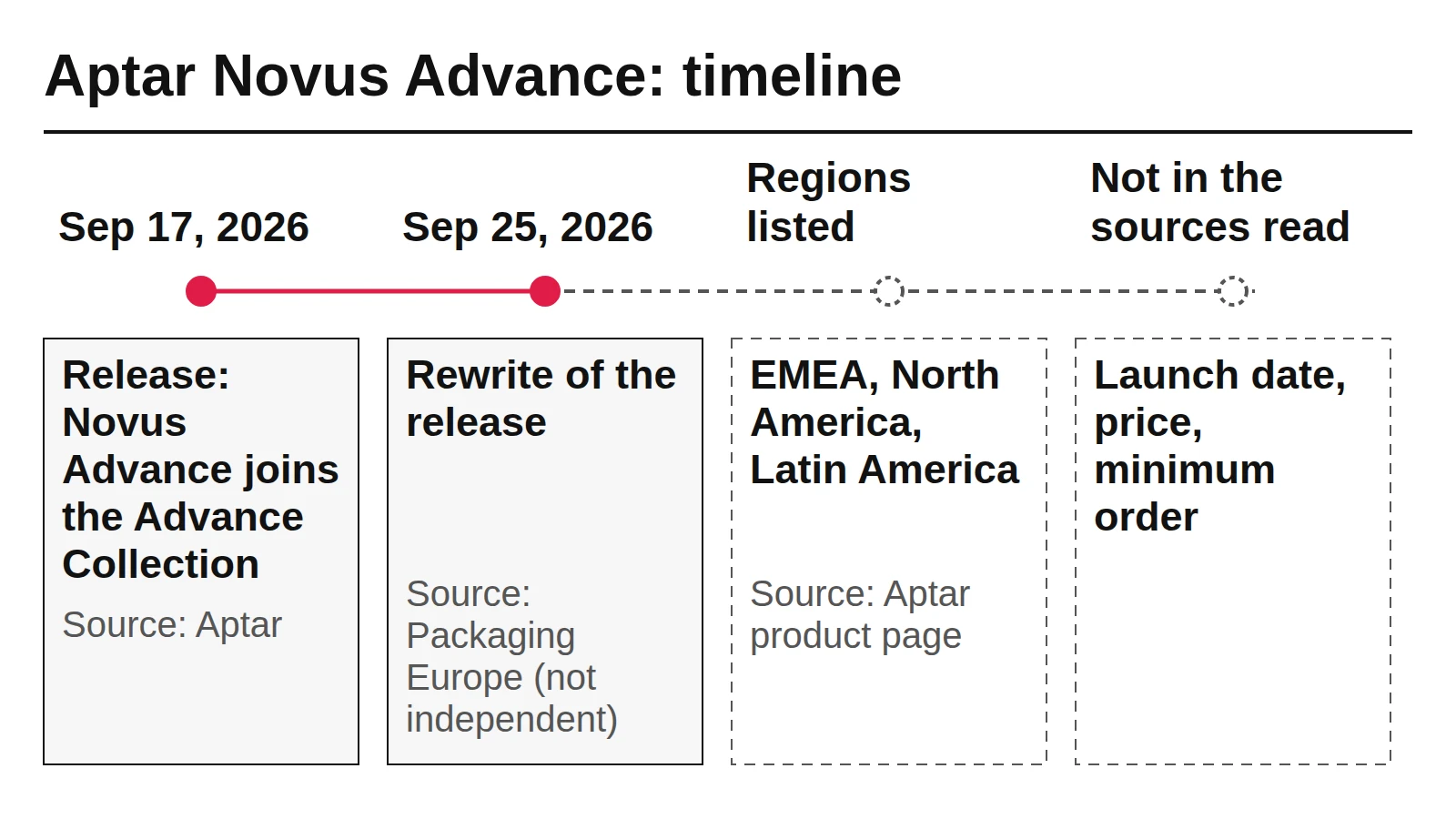
Aptar Beauty added Novus Advance to its Advance Collection, which it describes as a line of all-plastic pumps designed for recyclability, launched in 2025 with the GSA Advance dispensing pump and the PZ Advance spray pump. The announcement is dated September 17, 2026; Packaging Europe’s article on September 25 repeats it, so the two count as one source.
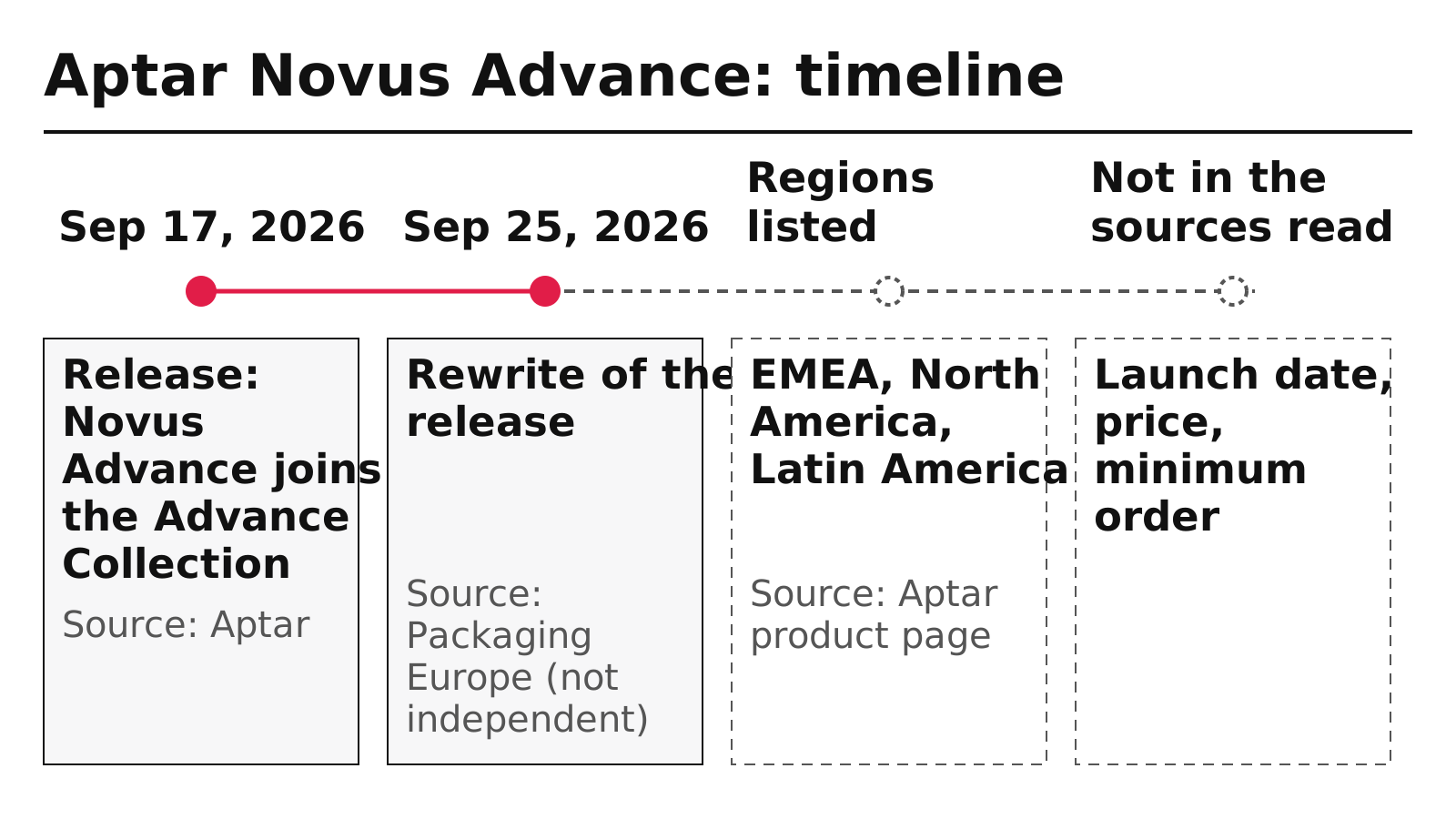
| Event | Date | Source | Nature of source |
|---|---|---|---|
| Release: Novus Advance added to the Advance Collection | September 17, 2026 | Aptar | Company announcement |
| Product page: specifications, footnotes, regions | Undated, read October 7, 2026 | Aptar | Company product page |
| Rewrite of the release | September 25, 2026 | Packaging Europe | Media rewrite, not independent |
| Expansion to other dosages and applications | Not dated | Aptar quote | Company intention |
| Launch date, price, minimum order | Not announced | — | Needs checking with Aptar |
Aptar’s release lists the technical points: a cartridge made entirely of polyolefin, combining PP and PE; no POM; the option of post-consumer recycled resin; an external bellow outside the dosage chamber delivering consistent 350 μL and 500 μL doses; compatibility with most formulas, “even with short chain alkanes,” across low to high viscosities; and a cap-free twist-to-lock that passed Aptar’s in-house ISTA-6 testing for e-commerce shipping.
Takeaway: The specification is Aptar’s own; the regions are named, but the dates are not.
Which claims come with conditions?
Three of the headline claims have conditions in Aptar’s own footnotes, and the media rewrite left two of them out. Read every claim with its condition attached.
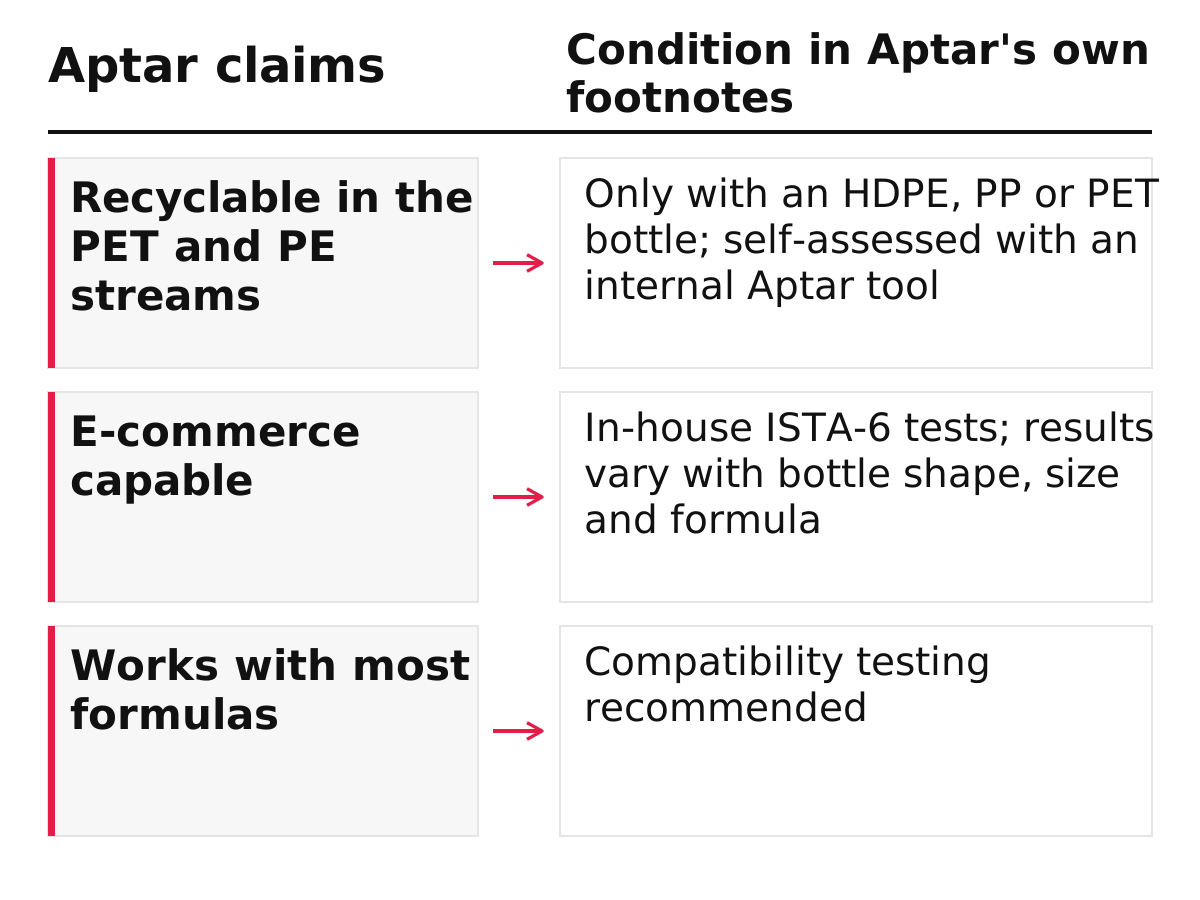
| Claim | Condition stated by Aptar | Left out by the Packaging Europe rewrite |
|---|---|---|
| Designed for recyclability in the PET and PE streams | With an HDPE, PP or PET bottle; self-assessment with an internal Aptar eco-design tool | The PP bottle option and the self-assessment |
| E-commerce capable | ISTA-6 compliant in Aptar’s in-house testing; results may vary with bottle shape, container size and formula | Rewrite says “reportedly passed”; no variation note |
| Works with most formulas | Compatibility testing is recommended | Not mentioned |
Common mistake: Quoting “fully recyclable” without “self-assessed” and without the bottle condition. The claim then reads as a third-party finding that applies to any bottle, which Aptar does not say.
Takeaway: Copy the footnote along with the claim, or do not use the claim.
What does the announcement tell a product designer?
For a designer, Novus Advance shows a pump designed as part of a package system: the material choice only works with certain bottles, the dose comes in two listed sizes, and the lock doubles as shipping protection. The table separates what Aptar disclosed from the design questions it raises; the questions are our analysis.
| Design area | What Aptar disclosed | Design meaning | What would need verifying |
|---|---|---|---|
| Materials | PP and PE cartridge, no POM, PCR option | With a PET bottle, parts should float and separate; with an HDPE or PP bottle, they must be compatible, including PE limits in the PP stream | Exact resins per part; PCR share |
| Dose | Two listed doses, 350 μL and 500 μL, with an external bellow | Choose the dose when specifying the pump | Which configuration you receive; dose consistency with your formula and viscosity |
| Assembly | Not disclosed: how the parts connect and are assembled | An information gap to close before design work | Interfaces with your bottle neck, fit checks and inspection criteria to agree with the supplier |
| Interface | Cap-free twist-to-lock | The lock replaces an overcap and protects in transit | Opening force; leak behaviour when locked |
| Testing | In-house ISTA-6 testing | Shipping performance depends on the whole pack | ISTA-6 with your own bottle, fill and carton |
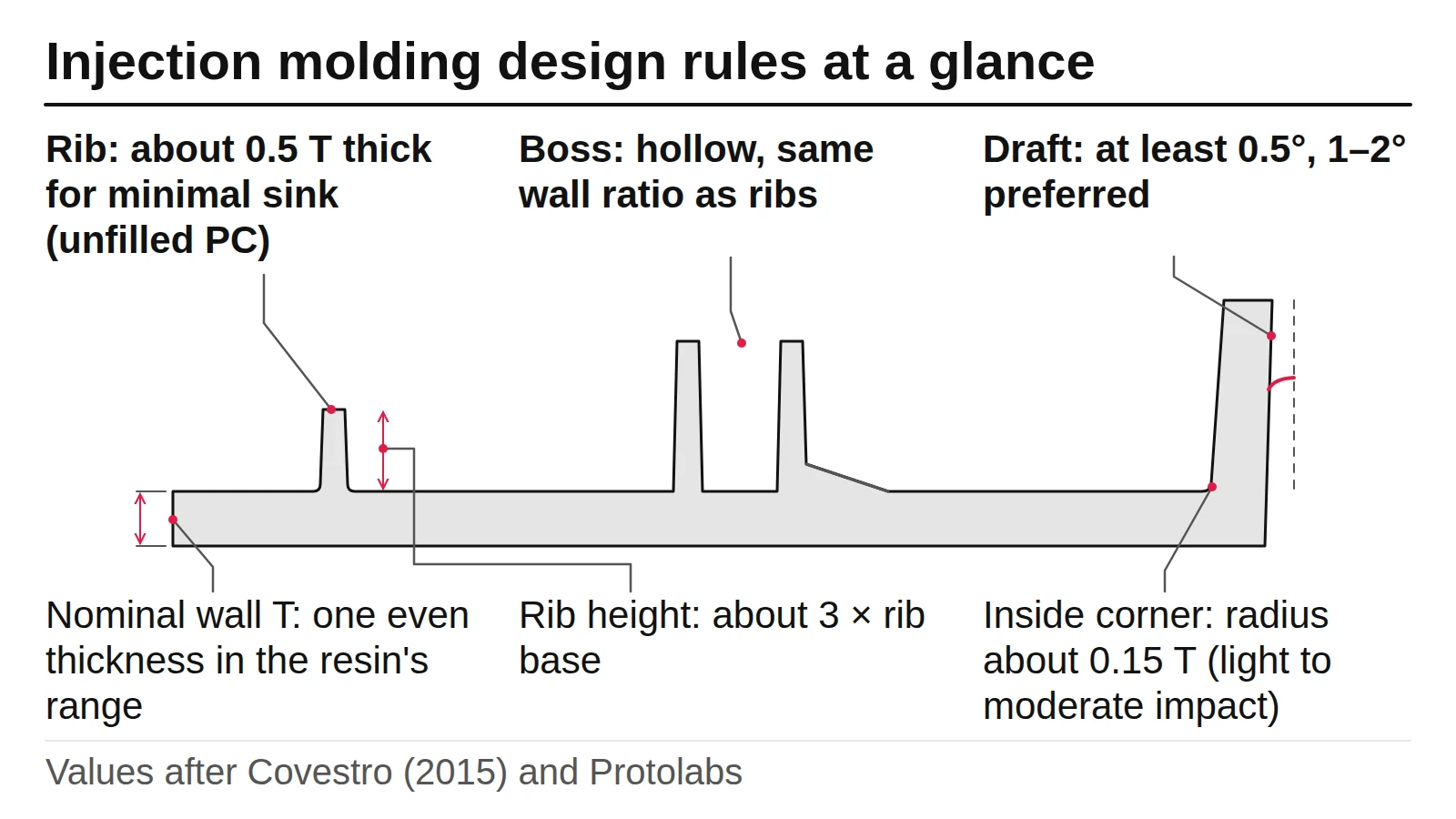
The same order works in student projects. Test the actuator feel and lock with printed parts using the print-test loop; move to production-plastic parts, as the 3D printing vs CNC comparison suggests, once dose and sealing matter; and design flexing and locking features to the injection molding wall rules and rib and boss rules. A record of each test belongs on the prototype page of a design portfolio.
Takeaway: Treat the pump and the bottle as one design, and test them together.
How could a polyolefin pump be recycled with a PET bottle?
The usual mechanism is separation by density: in PET recycling, polyolefin parts float and are skimmed off as a separate stream. APR’s PET design guidance, updated May 15, 2026, says polyolefin pumps, including PP, HDPE and LDPE, have a density of 1.0 g/cm³ or less, float in water and are most easily separated from the bottle, and that PET recycling captures the floating polyolefin as a marketable by-product. Any pump part that sinks mixes with the PET flake and needs testing. Aptar does not explain its own mechanism; this is the general rule that a full-polyolefin design is built around.
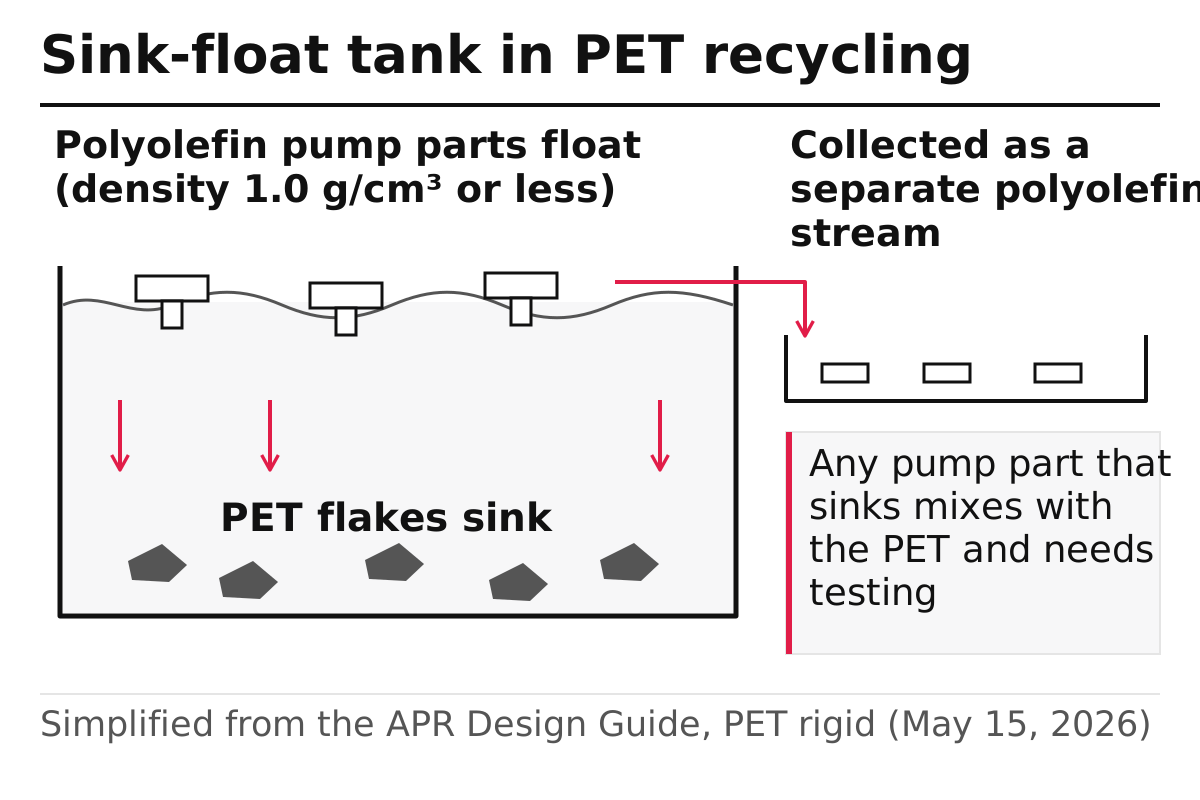
With an HDPE or PP bottle, the PP and PE parts travel with the polyolefin stream instead. APR’s guidance for colored PP packaging allows PE of up to 10% of the package weight in the PP stream and warns that more can make the recycled material brittle; whether a given pump and bottle stay under that limit is a question for testing, not for a press release.
Takeaway: “Recyclable with a PET bottle” means “separates from it”; check that every part floats.
Who is affected, and when should you act?
Students and prototype engineers can use the case now, for example by building a table of bottle material, pump material and test conditions from the public sources. Packaging engineers with a matching hair, body or sun care project can ask Aptar for specifications and sample availability, since North America is among the listed regions, and plan formula and shipping tests once samples are confirmed.
| Reader | Impact | Basis |
|---|---|---|
| Product design students | A case of designing a pump around the bottle’s recycling stream | Aptar release; APR guidance |
| Brand packaging engineers (hair, body, sun care) | Another all-plastic pump to evaluate for e-commerce packs | Aptar release and product page |
| Sustainability teams | A claim to verify before using it on pack | Self-assessment footnote |
| E-commerce operations | A twist-to-lock pump with in-house ISTA-6 results | Aptar footnote: results vary |
| Milestone | Date | Status |
|---|---|---|
| Announcement | September 17, 2026 | Confirmed by Aptar |
| Availability in North America | Region listed; no date in the sources read | Ask Aptar before planning tests |
| Price, minimum order, lead time | Not in the sources read | Ask Aptar when a project needs it |
| Other dosages and applications | Not dated | Aptar intention |
Takeaway: Use the case for study now; start physical tests only after specifications and samples are confirmed.
What is still unconfirmed?
The biggest gaps are a third-party recyclability assessment, acceptance in US recycling programs, and test results with your own bottle, formula and carton; the full list follows.
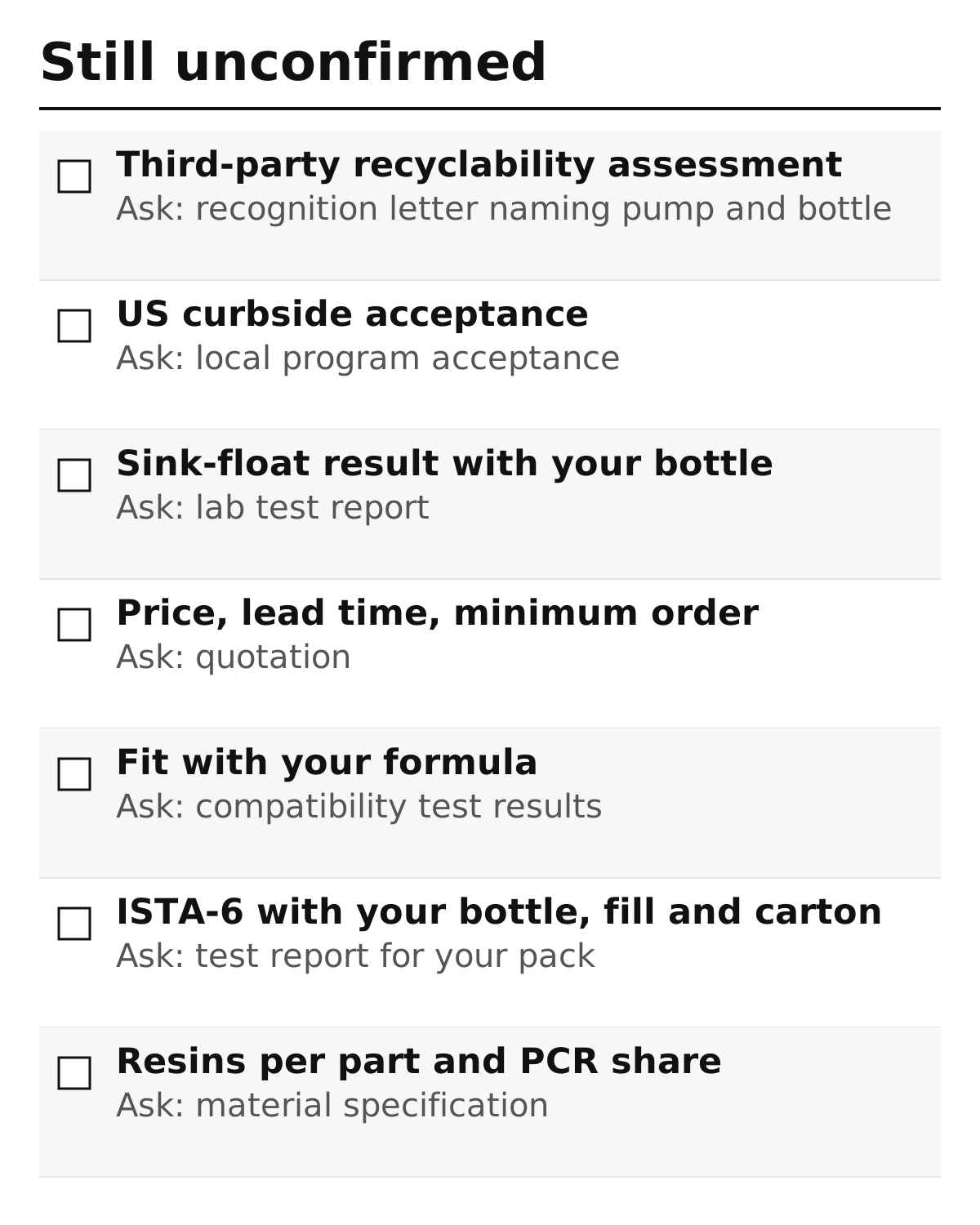
| Open item | Who can confirm | What to ask for |
|---|---|---|
| Third-party recyclability assessment (for example APR recognition or RecyClass) | Aptar; the assessing body | Recognition letter naming the pump and bottle material |
| Acceptance in US curbside programs | Local programs; APR | Program acceptance, APR test results |
| Sink-float result for your bottle and pump | A recognised laboratory | APR PET-S-05 or equivalent test report |
| Price, lead time, minimum order | Aptar | Quotation |
| Compatibility with your formula, including short-chain alkanes | Aptar; your lab | Compatibility test results |
| ISTA-6 results with your bottle, fill and carton | Your test lab; Aptar | Test report for your configuration |
| Resins per part and PCR share | Aptar | Material specification |
Takeaway: The three conditions in Aptar’s footnotes each turn into a test you have to run or a document you have to request.
Our reading
Our editorial view: Novus Advance is a clear example of design for recycling done at system level, choosing materials so the pump separates from or travels with the bottle. Its claims are carefully footnoted, and those footnotes are the reason not to repeat them without conditions. Compared with the foamer ALPLA describes as all polypropylene, covered in our ALPLA foam pump reading, Aptar uses two polyolefins; its L’Occitane custom pump, which Aptar says is built on its Satine platform, is a separate product, and its announcement makes no recyclability claim. More readings are under DFM, the dispensing pumps tag and the recyclability tag.
Takeaway: Useful design case, unverified recyclability; keep the two apart.
When this does not apply
This reading covers Aptar’s public statements as read on October 7, 2026 and APR’s general design guidance. It does not describe the pump’s internal design, certify recyclability, predict acceptance in any local program or give purchasing advice. Nothing here comes from handling the product.
Takeaway: Recheck the sources if Aptar publishes a third-party assessment or launch details.
How this page was put together
We read Aptar’s release of September 17, 2026 and its Novus Advance product page, Packaging Europe’s rewrite of September 25, 2026, and APR’s design guides for PET rigid and colored PP rigid packaging (both updated May 15, 2026), all on October 7, 2026. Aptar’s pages are the only primary source about the product. The design table, open items and reading are our analysis.
Takeaway: Re-read Aptar’s product page before relying on any figure here; footnotes and regions can change.
Related reading:
- ALPLA mono-material foam pump reading — Compare a single-polymer, metal-free foamer.
- Aptar L’Occitane pump reading — See customisation on an existing pump platform.
- Injection molding design rules — Check the molding rules behind plastic pump parts.