Mistaking a 500 μl dose for 500 ml, or a custom pump for an off-the-shelf one, wastes a design review. On August 26, 2026, Aptar Beauty announced a custom dispensing pump for L’Occitane en Provence’s redesigned, refillable hand care range, built on Aptar’s existing Satine pump platform rather than designed from scratch.
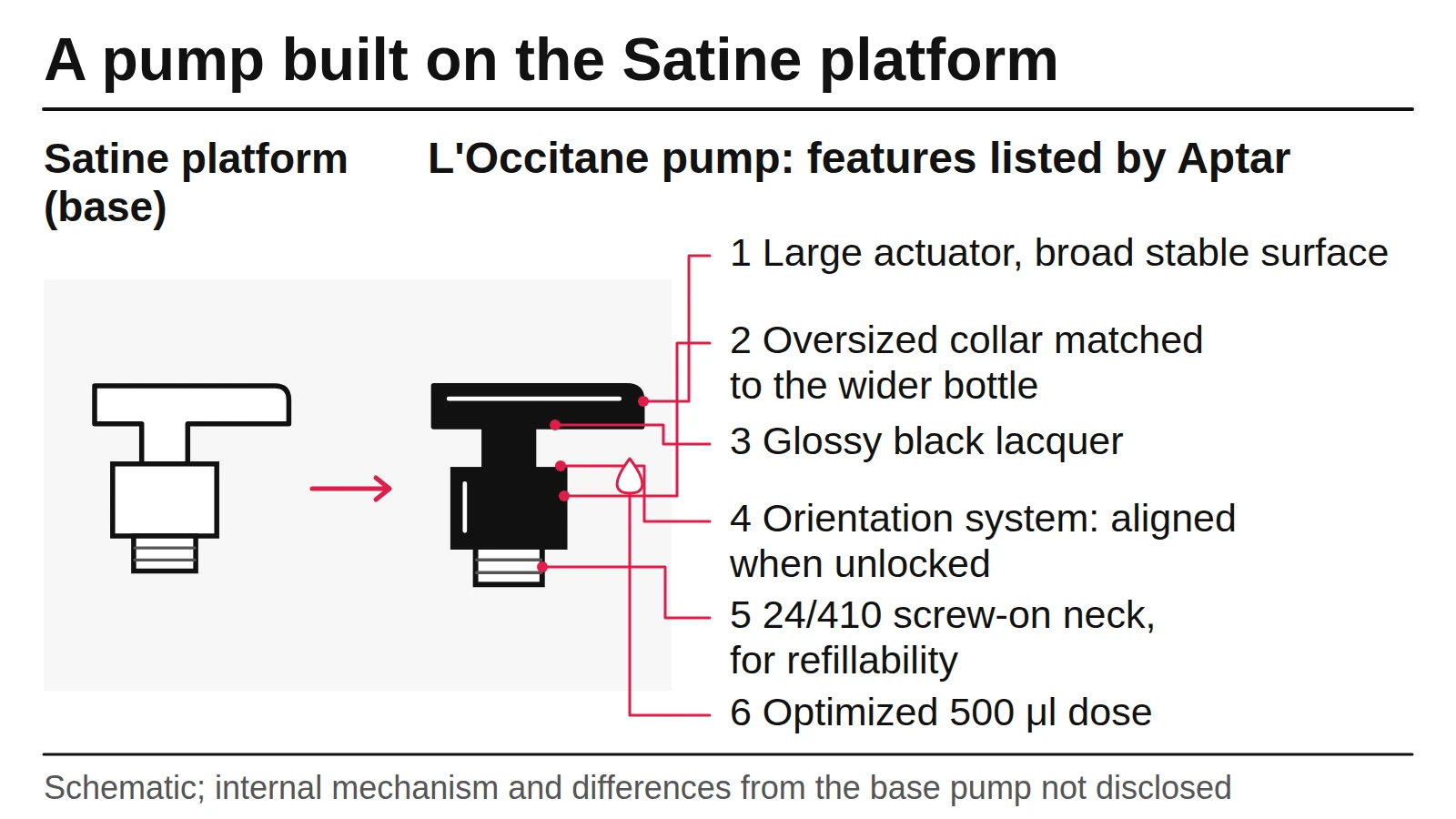
Aptar says the L’Occitane pump is a custom version of its Satine cosmetic pump with a 24/410 screw-on neck finish for refillability, a large actuator and oversized collar sized to the wider bottles, a glossy black lacquer, a technical orientation system that keeps the pump aligned with the bottle when unlocked, and an optimized 500 μl (microlitre) dose. Aptar describes the wide actuation surface as easy to use even for people with reduced hand mobility. The 350 ml and 500 ml bottles, in glass or plastic, are now refillable. The Aptar announcement reviewed on October 7, 2026 does not state cost, minimum order, US availability or the refill format.
This reading is for product design students and prototype engineers. The only primary source is Aptar’s release; Packaging Europe’s article of the same day repeats it. We have not handled the pump.
Key points
- Announced: a custom pump on an existing platform, for hand soap, hand wash and hand lotion bottles that are now refillable.
- Design lesson: customising an existing platform lets a team focus on the parts the user sees and touches, the fit to the bottle and the finish; which internal parts stay as in the base Satine pump is not disclosed.
- Inclusive interface: Aptar presents the wide actuation surface as usable by people with reduced hand mobility; no user test data were published.
- Open: commercial terms, availability, refill format and recyclability; see the list near the end.
What did Aptar announce?
Aptar Beauty said it worked with L’Occitane en Provence on a bespoke pump for the brand’s redesigned hand care range, whose bottle shape takes its cue from the apothecary jar. The release is dated August 26, 2026; Packaging Europe published a rewrite the same day, so the two count as one source.
| Event | Date | Source | Nature of source |
|---|---|---|---|
| Release: custom Satine-based pump for L’Occitane hand care | August 26, 2026 | Aptar | Company announcement |
| Rewrite of the release | August 26, 2026 | Packaging Europe | Media rewrite, not independent |
| Production: molded and decorated in Oyonnax, assembled in Le Neubourg | Stated in the release | Aptar | Company statement |
| Delivery of the bespoke product “in under a year” | Stated in the release, no start date | Aptar | Company statement about this project |
| US availability of the range and refills | Not stated in the Aptar announcement | — | See open items |
The release credits cooperation between Aptar’s French plants with local production and logistics and with “secure delivery of the final bespoke product in under a year.” That is Aptar’s description of this one project, not a general development time.
Takeaway: Read every specification here as Aptar’s statement about one customer project.
What was customised on the Satine platform?
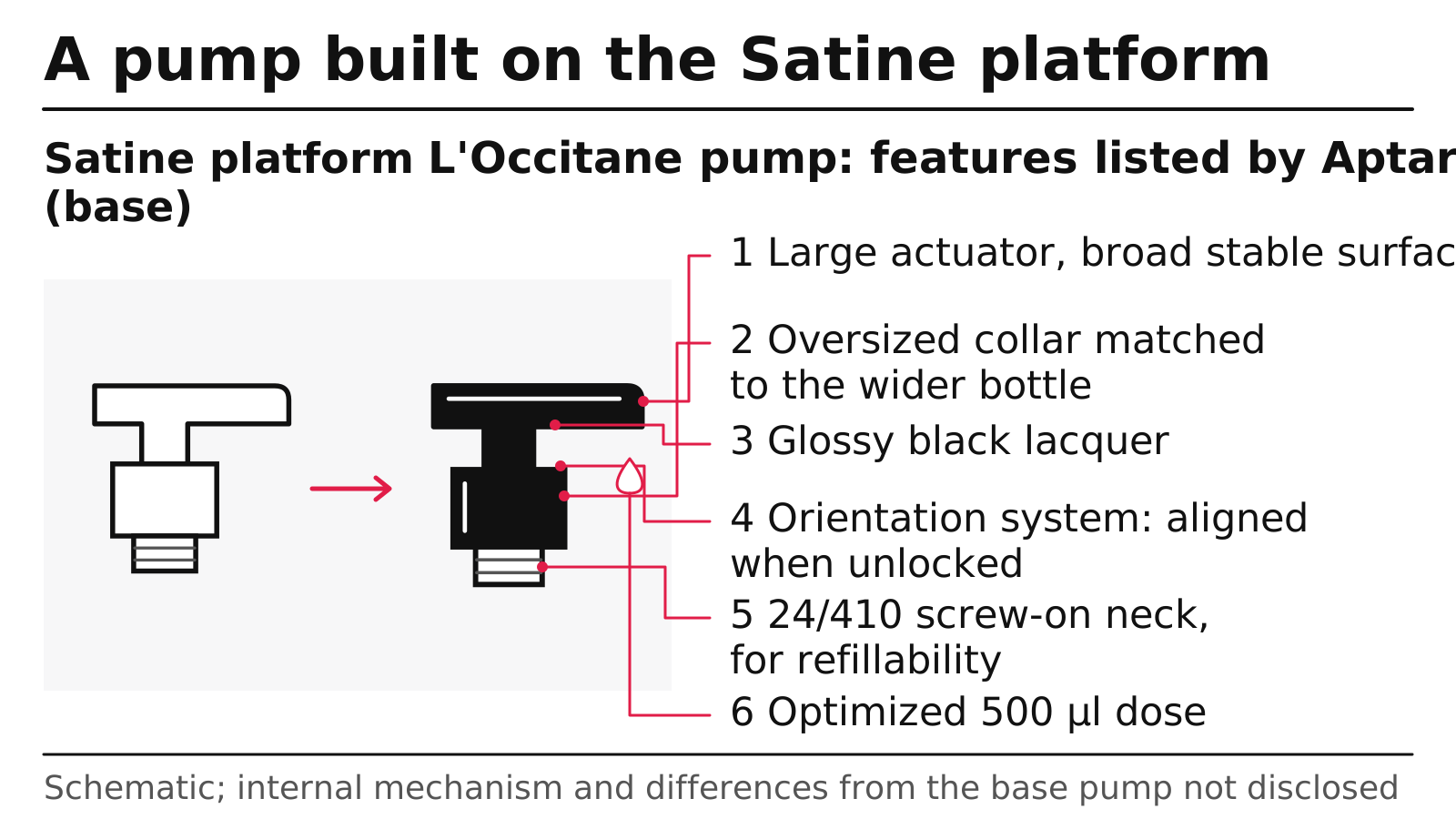
Aptar says the pump is based on its existing Satine platform and lists the finished pump’s features below; which of them differ from the base Satine pump, and what is inside, is not disclosed. The size, finish and orientation items are described as made for the brand. The “why it matters” column is our design reading.
| Feature of the finished pump | What Aptar says | Why it matters for a designer |
|---|---|---|
| Actuator | Large, with a broad, stable actuation surface | The touch point sets usability, especially for people with limited grip |
| Collar | Oversized, matched to the wider bottle silhouette | Proportion between pump and bottle carries the brand look |
| Finish | Glossy black lacquer, consistent with other products | Decoration is a separate process step and a quality check |
| Orientation system | Keeps the pump aligned with the bottle when unlocked | A shaped bottle needs the nozzle to point the right way |
| Neck finish | 24/410 screw-on, for refillability | A screw thread lets the pump come off for refilling |
| Dose | An optimized 500 μl (0.5 ml) dose | Check the dose over a full stroke and under your use conditions |
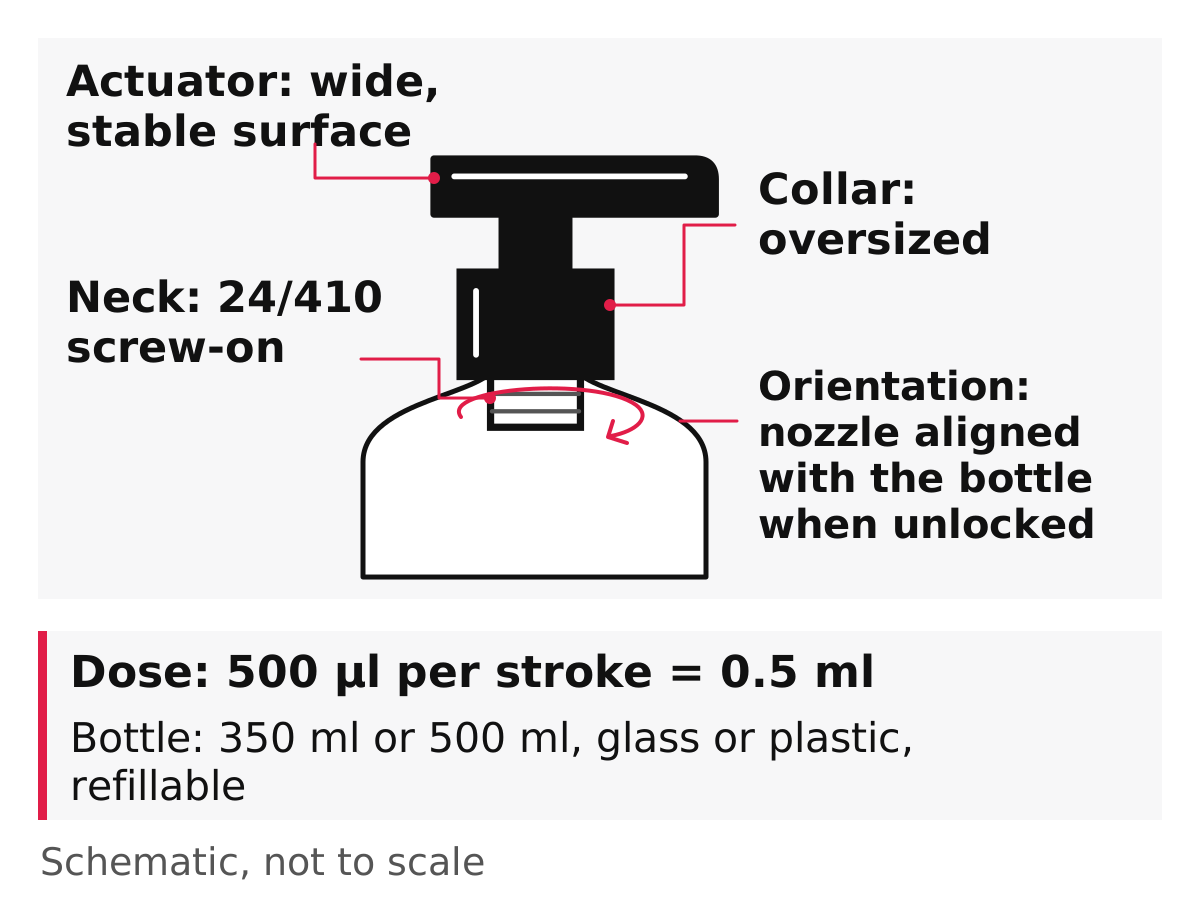
Common mistake: Reading “500 μl” as “500 ml.” The 500 ml figure is a bottle size; the 500 μl figure is the dose, half a millilitre per stroke.
Takeaway: List which features were made for the brand and which come from the platform before you copy the approach; the announcement only answers part of that.
What does the design tell a product designer?
The case shows three skills in one product: designing an interface for a wider range of hands, aligning a round mechanism with a shaped bottle, and designing for removal and refill. The table gives our analysis of each, with what you would need to verify in a project of your own.
| Design area | What the case shows | What you would test in your own project |
|---|---|---|
| Inclusive interface | A wide, stable actuation surface aimed at people with reduced hand mobility | Press force and finger position with a range of users |
| Alignment | Nozzle orientation fixed relative to a non-round bottle when unlocked | Alignment after repeated unlocking and refilling |
| Refill | Screw-on 24/410 finish | Thread engagement and sealing after the pump is removed many times |
| Decoration | Glossy lacquer on molded parts | Scratch and chemical resistance of the finish |
| Manufacturing split | Molding and decoration in one plant, assembly in another | How tolerances and finish are checked between sites |
For a student project, actuator size and feel are a form-and-ergonomics question you can answer with printed models; the prototype stages explain when to move to tougher parts, and the 3D printing vs CNC comparison covers when to machine. Threads and molded collars follow the wall thickness guidance and the corner radius rules. Presented as an analysis of public material, the case also suits a portfolio, as long as you do not imply any link with Aptar or L’Occitane.
Takeaway: The interface and the refill thread are the parts worth prototyping and testing first.
Refill or recycle: how does this differ from Novus Advance?
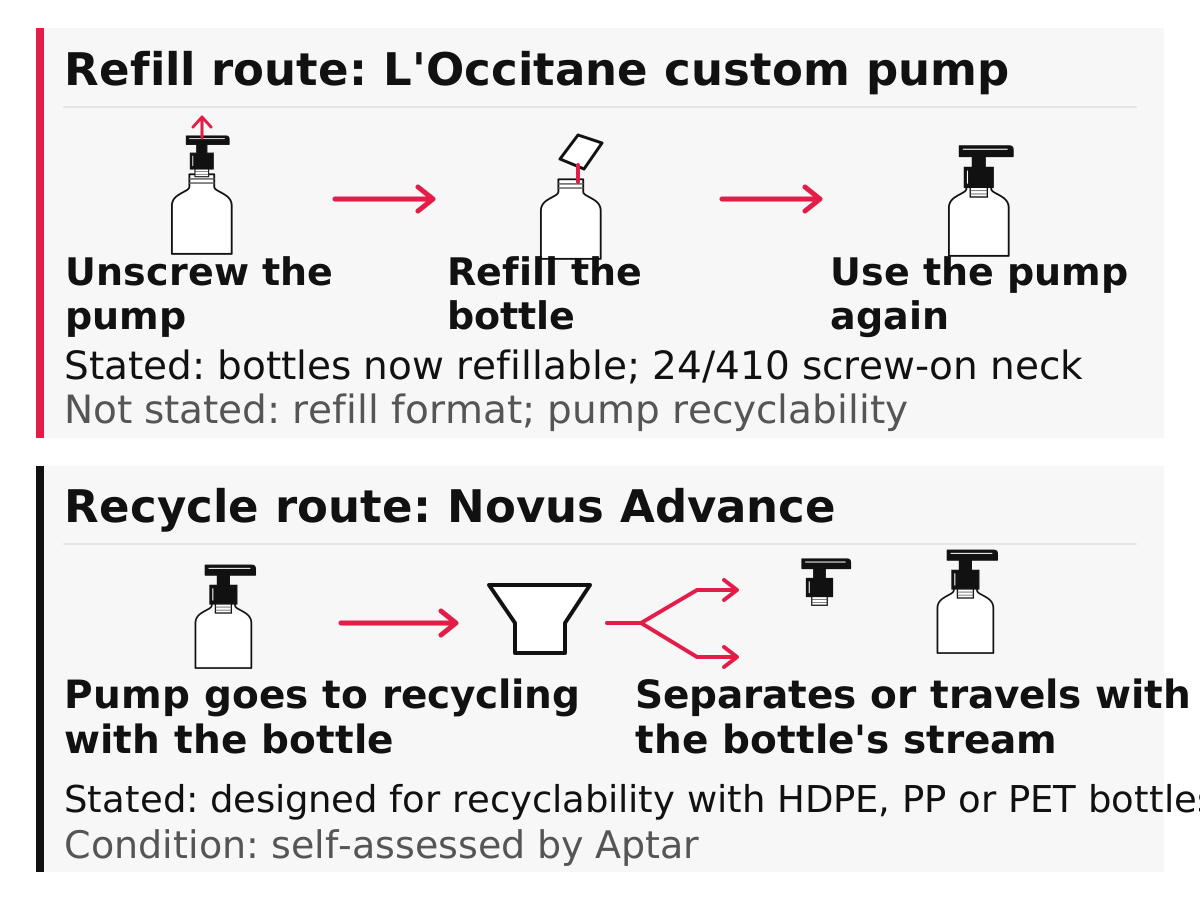
The L’Occitane pump supports a refill route, while Aptar’s Novus Advance, announced separately on September 17, 2026, is presented as a recycle route. They are different products on different platforms, and the recyclability claims made for Novus Advance do not apply to the L’Occitane pump.
| Factor | L’Occitane custom pump | Novus Advance |
|---|---|---|
| Route | Refill: bottles now refillable; screw-on neck for refillability | Recycle: described as designed for recyclability in the PET and PE streams with HDPE, PP or PET bottles (self-assessed with an internal Aptar tool) |
| Platform | Custom version of Satine | Advance Collection, all-plastic |
| Dose | 500 μl | 350 μl or 500 μl |
| Materials of the pump | Not stated | PP and PE cartridge, no POM |
| Recyclability claim | None made | Self-assessment with an internal Aptar tool |
Our Novus Advance reading sets out its conditions, and the ALPLA foam pump reading covers a third route: ALPLA describes its new foam pump as made entirely of polypropylene with no metal.
Takeaway: Refill and recycle are separate design goals; this pump addresses refill only, as far as Aptar has said.
Who is affected, and when should you act?
Design students can use the case now as a study in inclusive actuation and design for refill; brands considering refillable hand care packaging, and their pump and bottle suppliers, can use it as a reference before asking suppliers about their own projects.
| Reader | Impact | Basis |
|---|---|---|
| Product design students | A case in inclusive actuation and design for refill | Aptar release |
| Brand packaging and sustainability teams | A model for refillable bottles with a removable pump | Aptar release |
| Pump and bottle suppliers | An example of customising a platform pump for a shaped bottle | Aptar release |
| US shoppers and retailers | Unknown; availability not stated | Not in the sources |
| Milestone | Date | Status |
|---|---|---|
| Announcement | August 26, 2026 | Confirmed by Aptar |
| US availability of the range and refills | Not stated in the Aptar announcement | Ask L’Occitane if it matters to your project |
| Custom pump terms for other brands | Not stated in the Aptar announcement | Ask Aptar when a project starts |
More cases of this kind are collected in our product design articles.
Takeaway: The design case is usable now; any commercial timing has to come from the companies.
What is still unconfirmed?
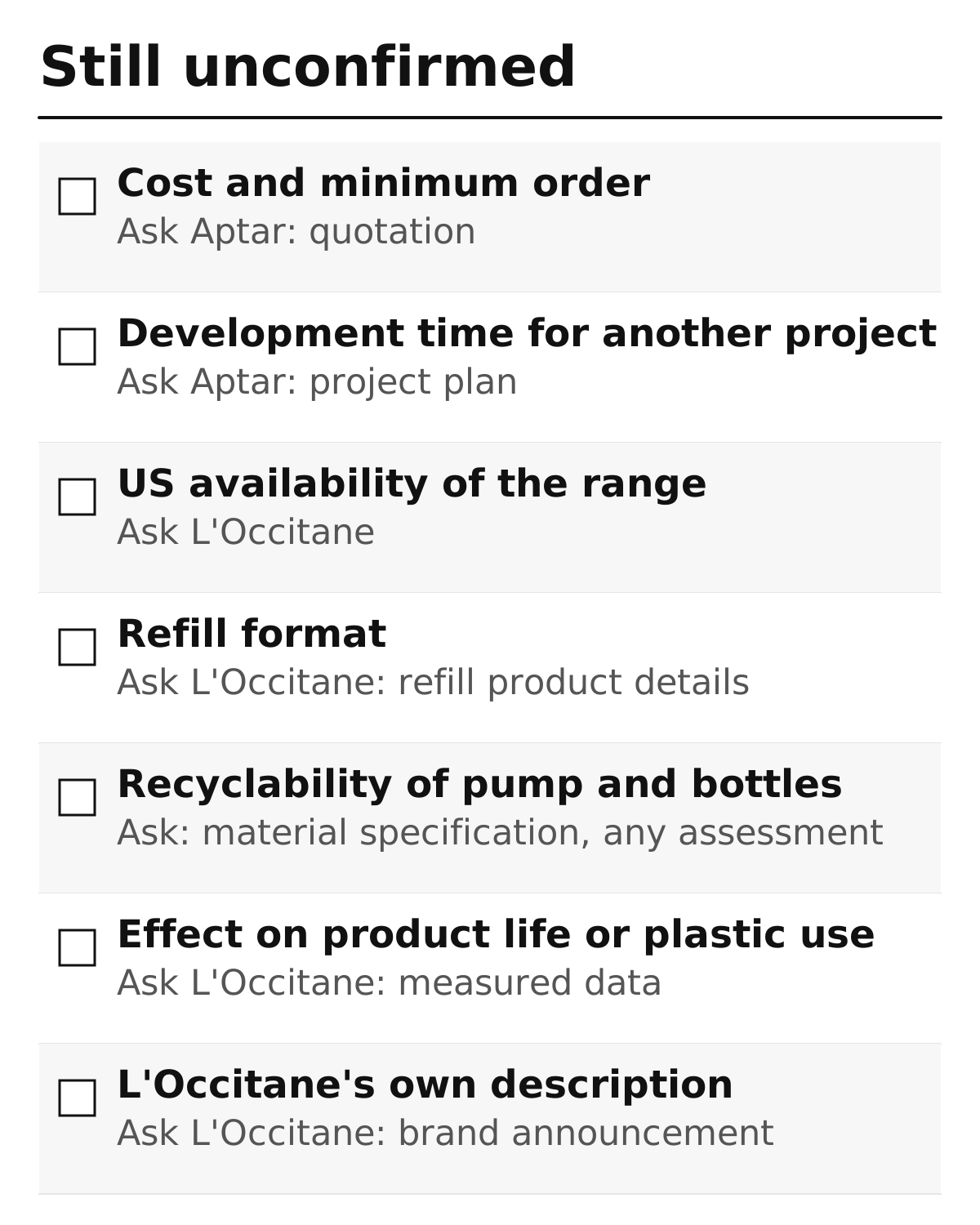
The Aptar announcement leaves cost and minimum order, US availability, the refill format and the recyclability of the pump and bottles open; the list below says who could confirm each item and what to ask for.
| Open item | Who can confirm | What to ask for |
|---|---|---|
| Cost and minimum order for a custom pump | Aptar | Quotation |
| Development time for another project | Aptar | Project plan; the “under a year” figure covers this project only |
| US availability of the range | L’Occitane | Market availability |
| Refill format: pouch, bottle or in-store | L’Occitane | Refill product details |
| Recyclability of the pump and bottles | Aptar; L’Occitane | Material specification; any third-party assessment |
| Effect on product life or plastic use | L’Occitane | Measured data, if any |
| L’Occitane’s own description of the project | L’Occitane | Brand announcement |
Takeaway: Most open items belong to L’Occitane, not Aptar; ask each company about its own part.
Our reading
As editors, not testers, we read the announcement as a clear example of building on an existing pump platform, with the parts people see and touch designed for the brand and for a wider range of hands; what changed inside is not disclosed. Aptar presents the result as inclusive, but no user testing was published, so treat that as a design intent. Related readings are under the dispensing pumps tag and the refillable packaging tag.
Takeaway: A strong design case; the usability and refill benefits are stated intentions, not measured results.
When this does not apply
This reading covers Aptar’s announcement as read on October 7, 2026. It does not describe the Satine mechanism, which is not detailed in the release; it does not cover L’Occitane’s own materials, which we did not read; and it is not product support or purchasing advice.
Takeaway: Recheck the sources if L’Occitane publishes details of the range or its refills.
How this page was put together
We read Aptar’s release of August 26, 2026, Packaging Europe’s same-day rewrite and ALPLA’s pump product page (for the 24/410 closure listing), all on October 7, 2026. For the comparison section we also read Aptar’s Novus Advance release of September 17, 2026 and its product page, and ALPLA’s foam pump release of September 22, 2026. Aptar’s August release is the only primary source about the L’Occitane pump. The design tables, route comparison, open items and reading are our analysis.
Takeaway: Use this page as a list of design questions, and check the model’s own documents before any engineering decision.
Related reading:
- Aptar Novus Advance pump reading — Compare a pump designed for recycling rather than refill.
- ALPLA mono-material foam pump reading — See a single-polymer, metal-free approach.
- Rapid prototyping with 3D printing — Prototype an actuator and test it with users.