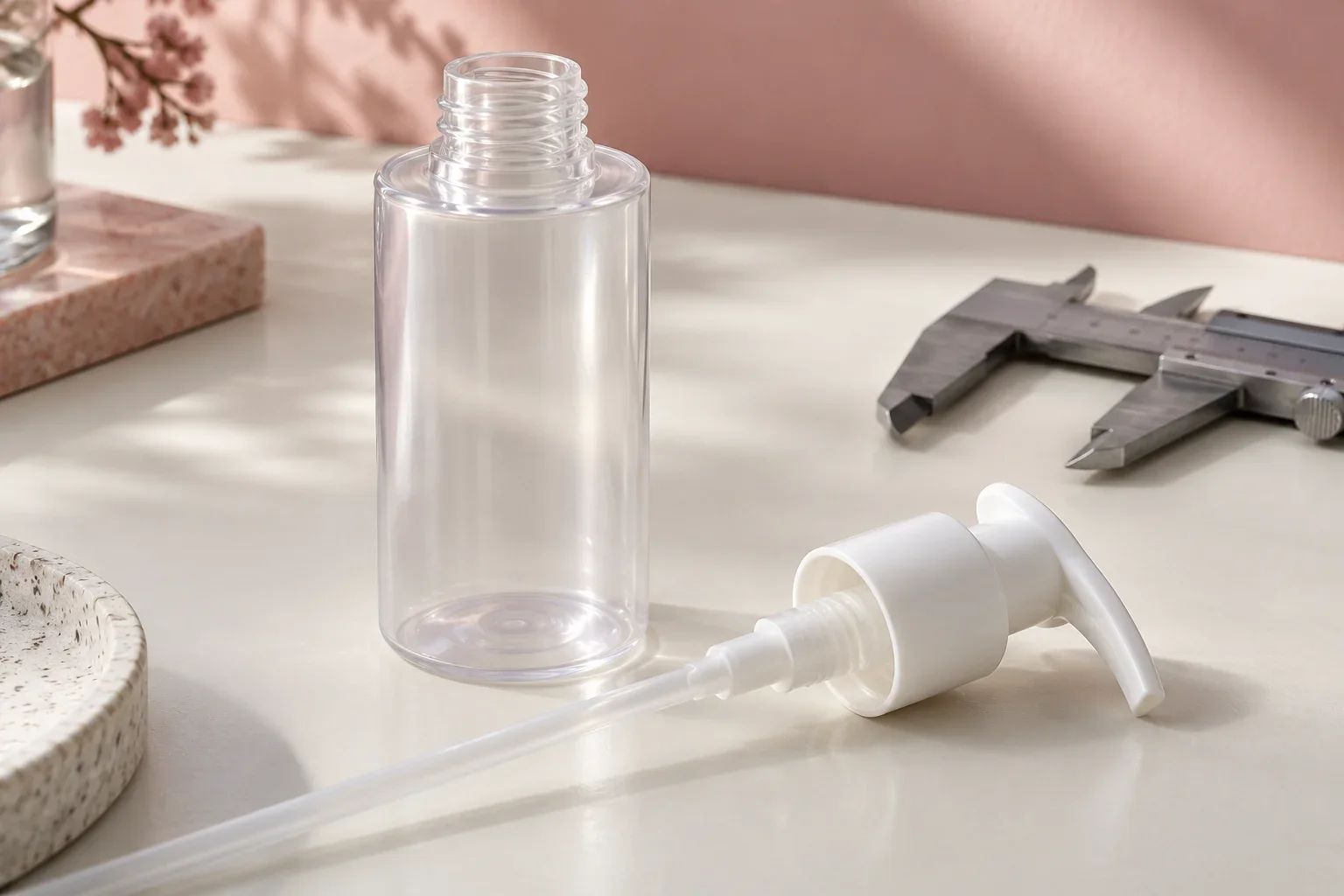
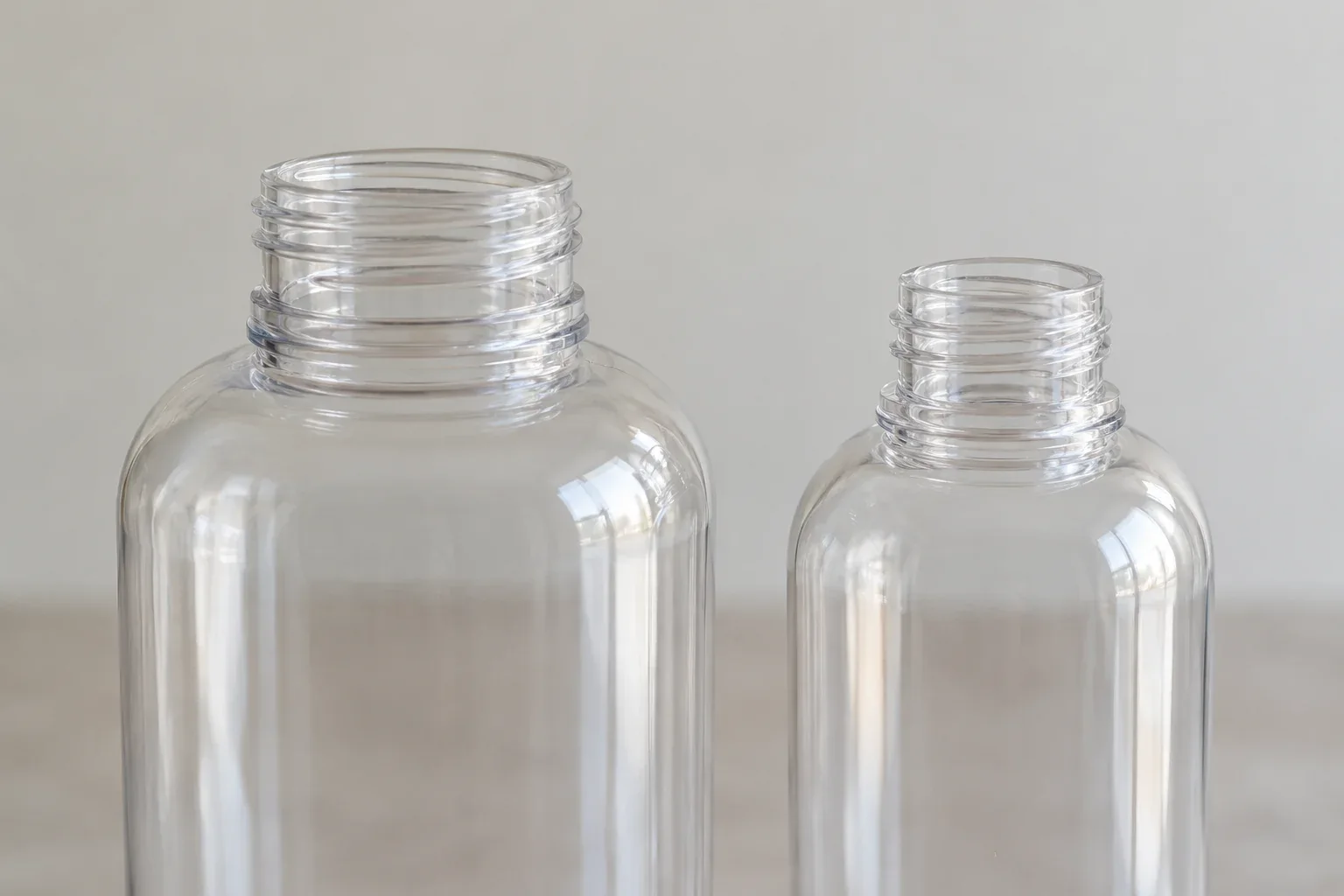
Read a bottle neck finish chart by locating each dimension on the bottle, then compare the bottle and closure drawings. T is the outside diameter of the thread. E is the outside diameter of the neck. I is the inner diameter of the bottle neck. S is measured from the top of the finish to the top edge of the first thread.
For a lotion pump dispenser project, work through the dimension key, reference chart and sealing checks below. Keep the bottle drawing and pump closure drawing beside the chart as you go.
Locate the neck finish dimensions
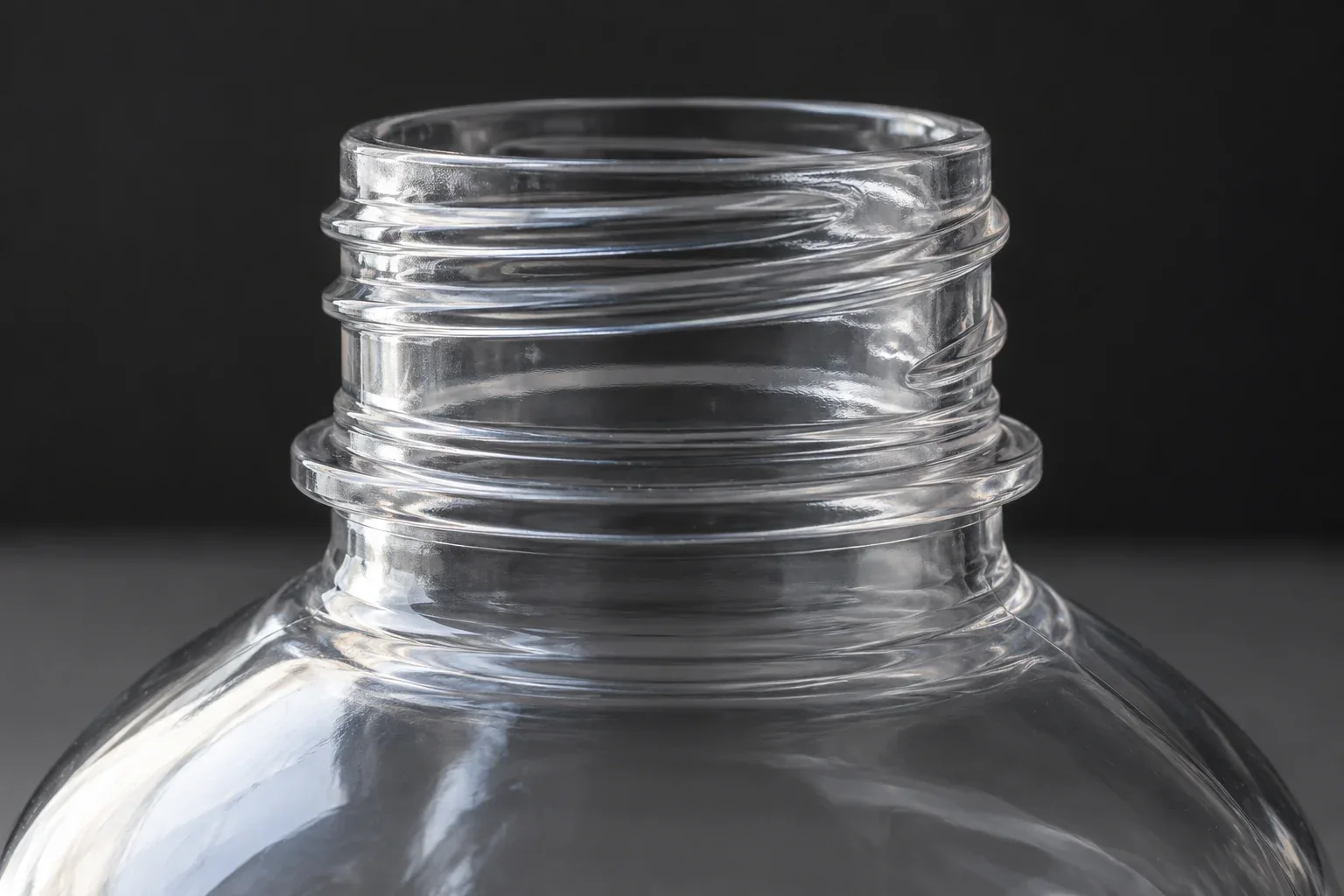
Start at the thread, neck wall, opening and top of the finish.
| Dimension | What to read |
|---|---|
| T | T is the outside diameter of the thread. |
| E | E is the outside diameter of the neck. |
| I | I is the inner diameter of the bottle neck. |
| S | S is measured from the top of the finish to the top edge of the first thread. |
| H | H is measured from the top of the neck to where the extended T diameter intersects the shoulder. |
| L | L locates the bead from the top of the finish to the top of the bead. |
| W | W is bead width. |
The tolerance range of T determines the mate between bottle and closure. Dispensing plugs and fitments require a controlled I dimension for a proper fit. S determines closure orientation and the amount of thread engagement. Thread depth is half the difference between E and T.
Use those relationships to mark up the drawing: highlight the thread diameter, opening and thread-start position separately. Carry the dimension letters into your review notes.
Compare the reference chart
SP-410 finish for plastic bottles: finished plastic sizes in millimetres. Drawing 1165380-1, dated 99/03/10.
Use this historical reference alongside the drawings for your selected parts. Preserve the mean, minimum, maximum and tolerance labels when copying neck finish dimensions into a specification.
| Dimension | Size 24 | Size 28 |
|---|---|---|
| T mean | 23,67 ± 0,20 | 27,38 ± 0,25 |
| E mean | 21,54 ± 0,20 | 24,99 ± 0,25 |
| I minimum | 13,11 | 15,60 |
| H mean | 16,41 | 17,98 |
| H tolerance | ± 0,38 | ± 0,38 |
| S mean | 1,17 | 1,17 |
| S tolerance | ± 0,38 | ± 0,38 |
| L minimum | 11,10 | 11,76 |
| W maximum | 2,13 | 2,39 |
| Threads per inch | 8 | 6 |
Apply the drawing notes
T and E are the average of two measurements taken 90° apart. The container supplier and customer determine the limits of ovality as necessary. Unless otherwise specified, I minimum applies to the full length of the opening. I minimum is specified for filler tube only. If a bead is used, its diameter and L minimum must be maintained. The top-of-finish width must be considered for the sealing system being used. The finish specification includes thread style, finish identification and drawing number.
Record the drawing identification with the dimensions. Keep the opening requirement, bead requirement and sealing-surface check beside the dimensional results.
Read thread turns separately from pitch
The second finish-code number refers to height and thread configuration. The common 410 finish is described as having 1.5 thread turns. For the SP-410 drawing, a minimum of 540° of full-depth thread shall be maintained.
Keep a separate line in your review for thread development and for threads per inch. Copy each requirement under its own heading.
Check the pump seal and closure clearance
Bottoming-out occurs when the closure skirt contacts the container before the land and closure create a seal. The shoulder or transfer bead are usual contact locations in bottoming-out.
Inspect the closure skirt, shoulder and bead together with the sealing surfaces.
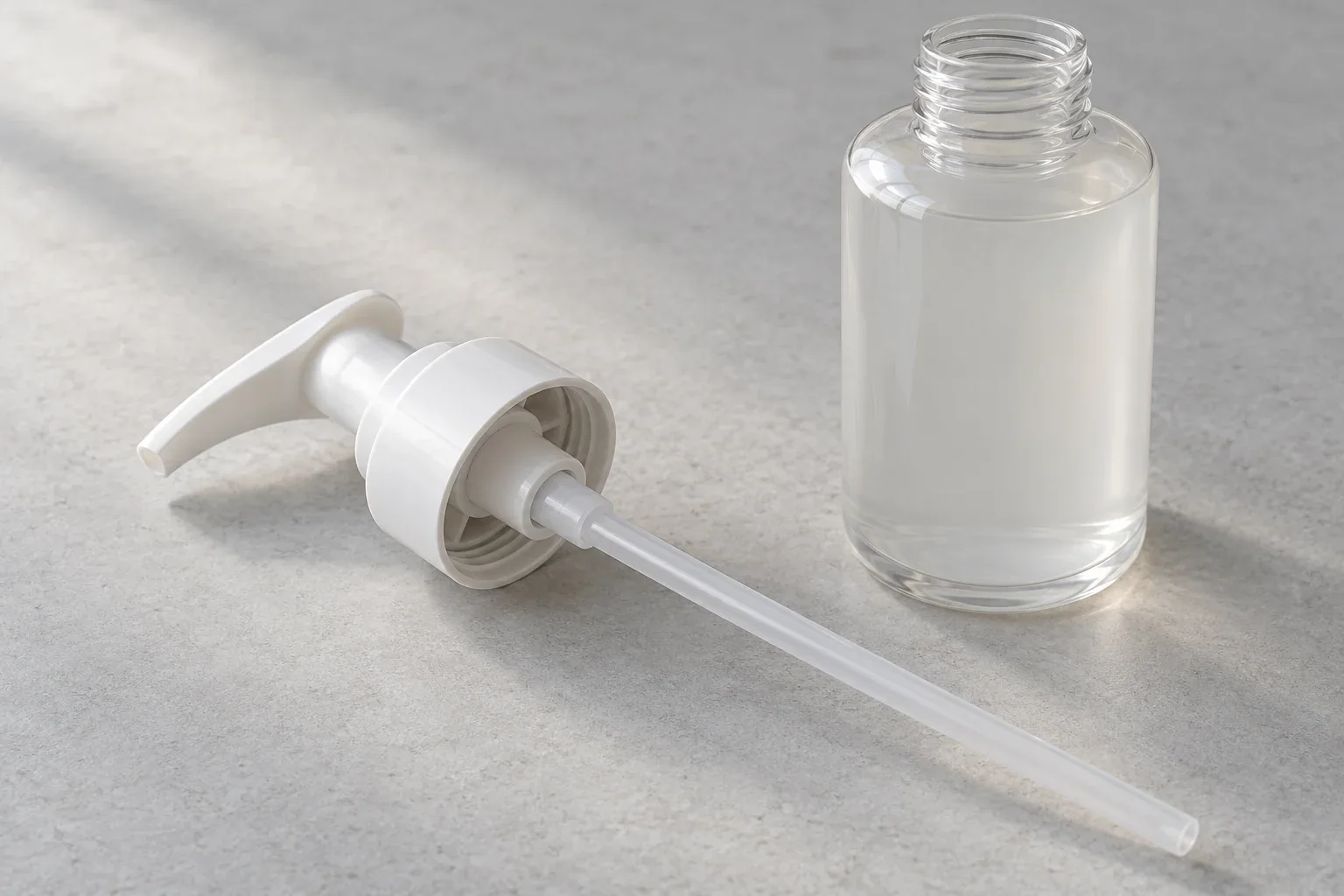
A gasket is a liner between the sealing surface of the container lip and the closure. A land seal works by applying pressure to the top or land of the container finish. Binding is usually the result of interference.
Confirm sealing in the assembly
For screw-threaded pumps, application torques are recommendations. Acceptable bottle sealing should be confirmed by leak testing.
Include the sealing result in your physical prototype testing plan. Record the parts, drawing references and observations together for the next design review.
Questions to resolve before choosing a pump
Which neck-size option belongs on the order?
Pav Dispenser lists a 24/410 neck-size option. Pav Dispenser lists a 28/410 neck-size option.
Specify the selected closure option in the order and match it to the bottle drawing.
Where do I start if the closure binds?
Binding is usually the result of interference.
Inspect the mating parts for interference and record the contact location. Then return to the dimensional and sealing checks above.
What should the handoff include?
Prepare the bottle drawing, closure drawing, selected finish identification, dimension notes and sealing-test record. Use the manufacturing specification handoff checklist to organize the review, or browse the design articles for the next stage of your project.
Sources
- Plastcaps — SPI Neck Finish Specifications
- WB Bottle — Technical Library
- ISBT/Husky — Plastic bottle finish reference drawing
- C.L. Smith — Packaging catalogue, neck finish dimensions
- Lectro Engineering / MTM Systems — Cap & Bottle Neck Info
- Aptar — Personal Care Spray Pumps EMEA
- Aptar India — Pav Dispenser