Reading a press release as a test result is how a design team wastes weeks specifying a part nobody has verified. On September 22, 2026, ALPLA announced a foam dispenser pump made entirely of polypropylene, with no metal parts; everything beyond that announcement, from recycling certification to US availability, is still unconfirmed.
ALPLA says its new mono-material foam pump is a patented, completely metal-free polypropylene system that weighs 25 grams in its standard version, uses a twistlock to save space in transport and on the shelf, and fits bottles of various sizes. Its product page names the model AF-MP-150, with a 90-degree twist-lock. After a pilot phase, ALPLA intends to start commercial production with anchor customers; no date, price or US availability has been published. All of this is the company’s own statement, read on October 7, 2026.
This reading for product design students and prototype engineers uses one primary source, ALPLA’s release and product page, plus design guidance from the Association of Plastic Recyclers (APR). We have not handled or tested the pump.
Key points
- Announced: an all-polypropylene, metal-free foam pump with a twistlock, standard version 25 g (ALPLA, September 22, 2026).
- Design lesson: every function a metal part used to perform has to come from molded plastic geometry, and the pump only helps recycling if it matches the bottle’s material stream.
- Not yet shown: third-party recyclability certification, US availability, price, output volume, neck finish and filling-line fit.
- Next step: treat the claims as questions; the checklist below says who can answer each one.
What did ALPLA announce?
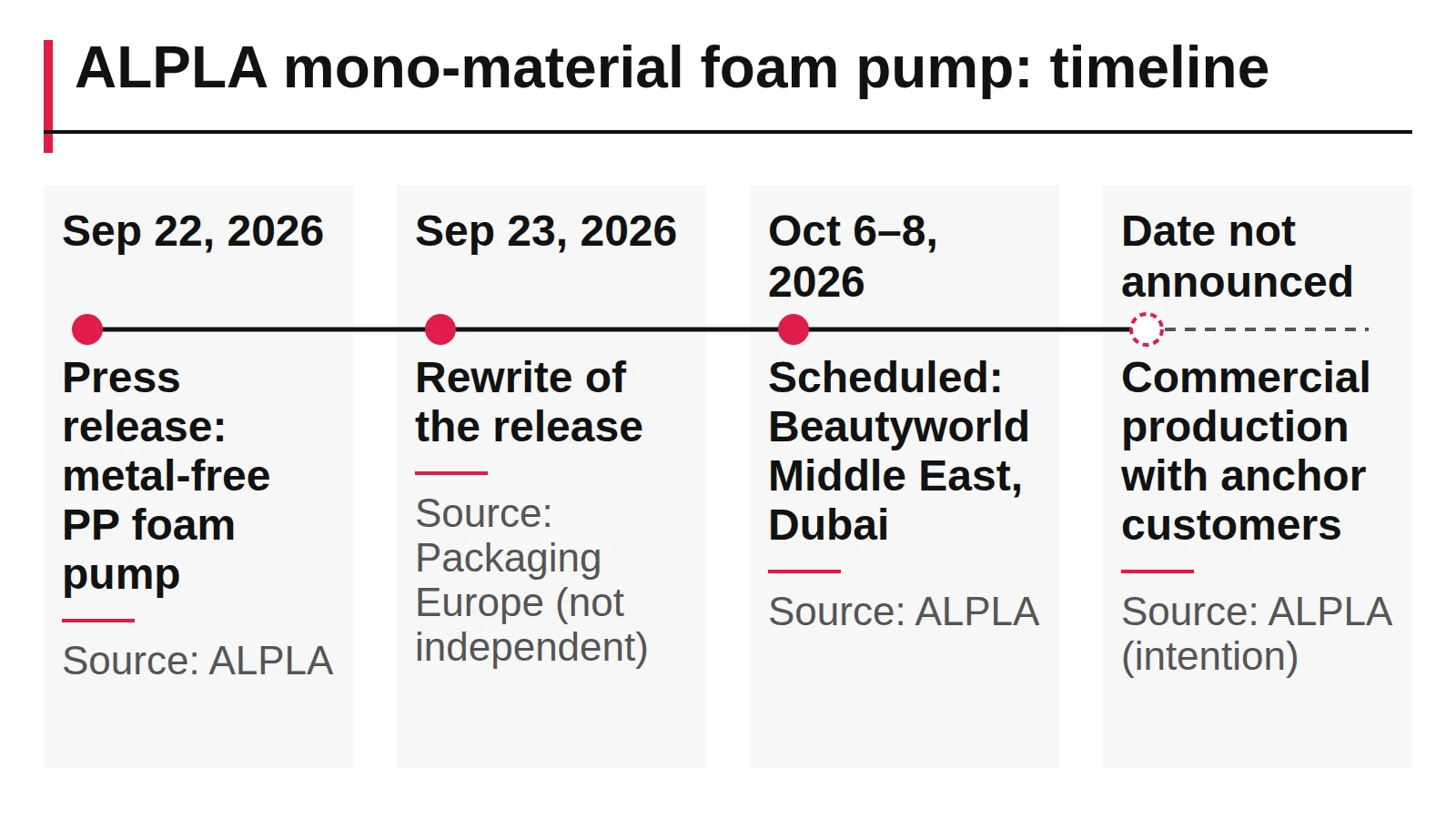
ALPLA, which describes itself as a global packaging and recycling specialist, announced through its injection molding division ALPLAinject a foam dispenser pump made of a single plastic, polypropylene, for personal care and pharma products. The release appeared on September 22, 2026; Packaging Europe published a rewrite the next day with the same quotes, so the two count as one source.
| Event | Date | Source | Nature of source |
|---|---|---|---|
| Press release: mono-material foam pump launched | September 22, 2026 | ALPLA blog | Company announcement |
| Rewrite of the release | September 23, 2026 | Packaging Europe | Media rewrite, not independent |
| Model AF-MP-150 described: 100% PP, engine concept, 90-degree twist-lock | Page undated, read October 7, 2026 | ALPLA product page | Company product page |
| Presentation scheduled at Beautyworld Middle East, Dubai | October 6–8, 2026 (under way at the time of writing) | ALPLA release | Company announcement |
| Commercial production with anchor customers | Not announced | ALPLA release | Company intention |
The release also says ALPLA already sells several mono-material dispensers. Its pump page lists two of them, the AHD-200D and AHD-400D, as 100% polypropylene with 2 ml and 4 ml outputs and a 270-degree lock; the AHD-200D is offered with 24/410 and 28/410 closures. The new foam pump extends that range to foamers. ALPLA’s quote calls it, “for the first time, recyclable solution for foamers”; that is the company’s claim, not an industry finding.
Takeaway: Everything in this section is what ALPLA says; the date of commercial production is the missing fact.
What does the announcement tell a product designer?
For a designer, the announcement raises one central question: if a pump contains no metal, any return force, sealing and locking have to come from plastic parts. ALPLA does not explain how its pump does this. The table separates what ALPLA disclosed from the design questions it raises; the questions are our analysis, not information from ALPLA.
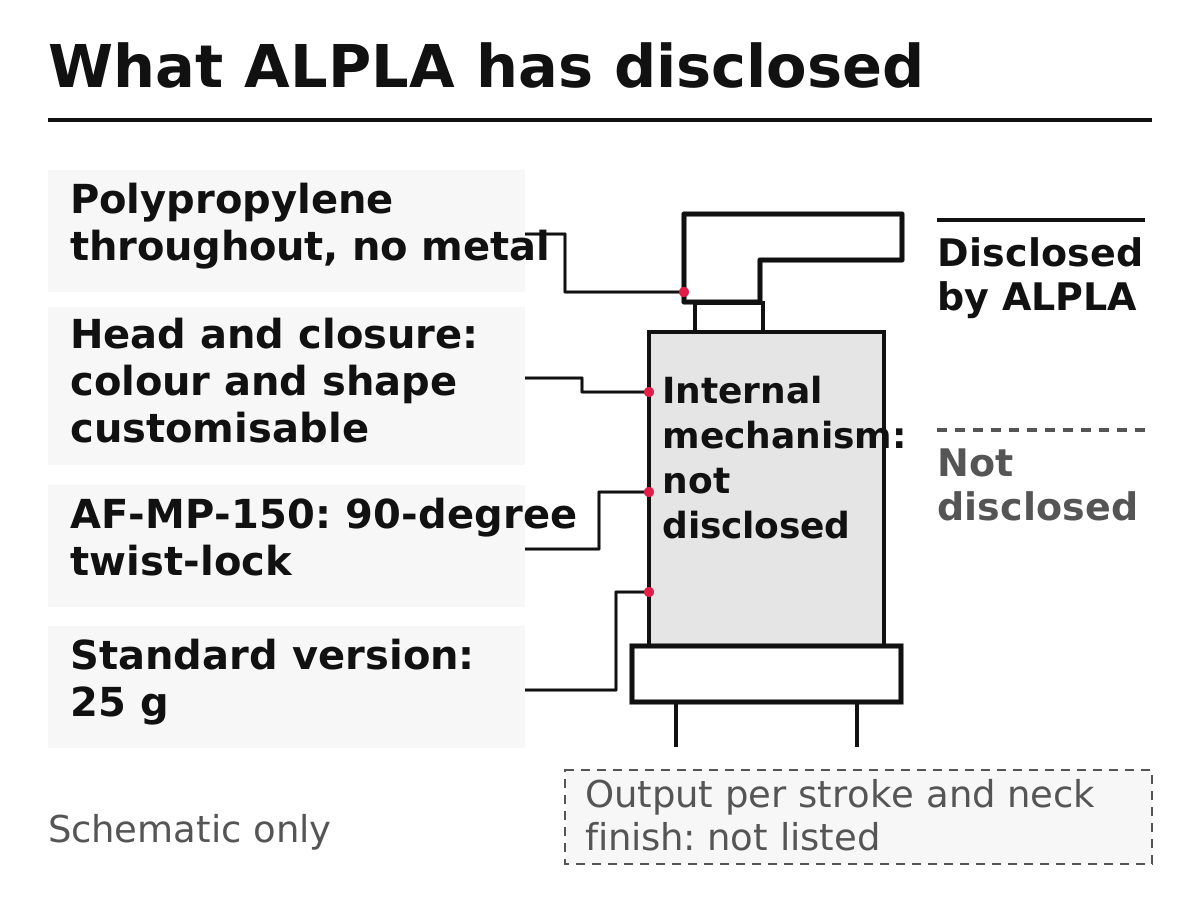
| Design area | What ALPLA disclosed | What it means for the design | What would need verifying |
|---|---|---|---|
| Materials | Polypropylene throughout, no metal; PCR possible | Any return-force function must also be achieved in PP; how is not published | Force over repeated strokes and after storage; PCR share |
| Interface | Head and closure colour and shape can be customised | Customisation is offered on the visible parts | Which dimensions stay fixed; whether customising affects the mechanism; actuation force |
| Locking | Twistlock; 90-degree twist-lock on the AF-MP-150 | Locked for transport and shelf, opened by the user | Leak behaviour when locked; ease of first opening |
| Assembly and fit | Suits bottles of various volumes; patented system; product page names an engine concept | How outer parts attach to the engine is not published | Neck finish, output per stroke, filling and capping line fit |
| Weight | 25 g for the standard version | A benchmark for the standard version only | Weight of customised versions |
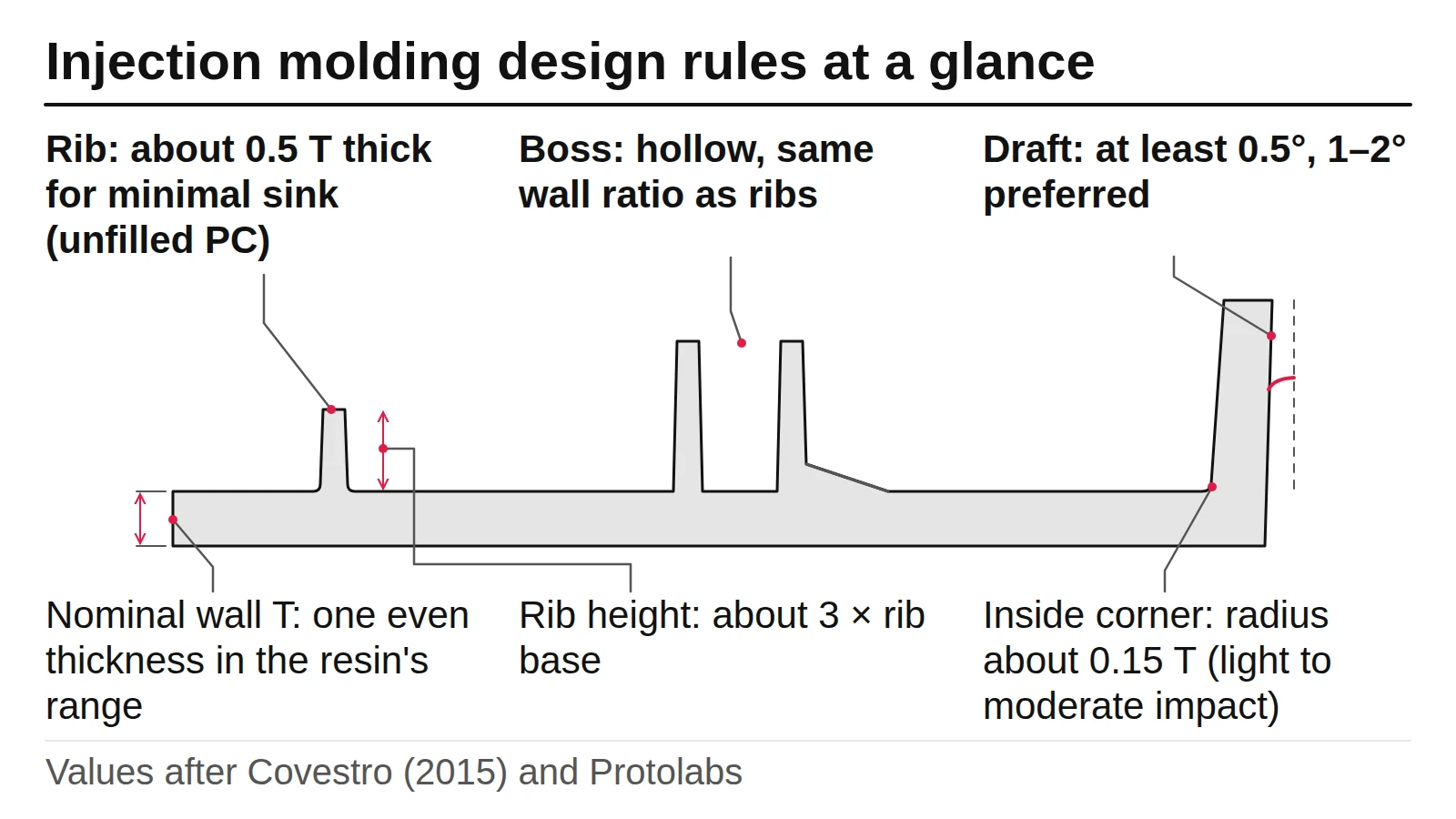
If you are building a dispenser prototype yourself, the same split applies. Prototype the outer parts early in printed form, using the print-test loop, but expect the spring and seal functions to need parts in the production plastic; the 3D printing vs CNC comparison explains when machined plastic gives a more honest test. Molded features such as thin flexing sections and snap details follow the wall thickness guidance and rib and boss rules, which is why a single-plastic design is as much a molding exercise as a mechanism one. Neck and thread fits also depend on what tolerance the molder can hold, as the molded-part tolerance section explains.
Common mistake: Treating “metal-free” as a performance result. It describes the materials; the stroke force, sealing and life of the pump still have to be shown by testing.
Takeaway: Ask which dimensions stay fixed when the head and closure are customised, and test the functions the unpublished mechanism must deliver.
Why does a metal-free pump matter for recycling?
Metal in a pump can stop the whole package from being recycled, and a pump made of the bottle’s own plastic is designed to be processed with it. APR’s design guide for colored polypropylene rigid packaging, updated May 15, 2026, says pumps should be made of materials that do not harm the recycled plastic, and that PP closures and dispensers are captured and processed with a PP package. It classes metal attachments as detrimental to recycling even when they pass sorting tests, and as making the package non-recyclable when they are large enough to trigger metal detectors or magnets.
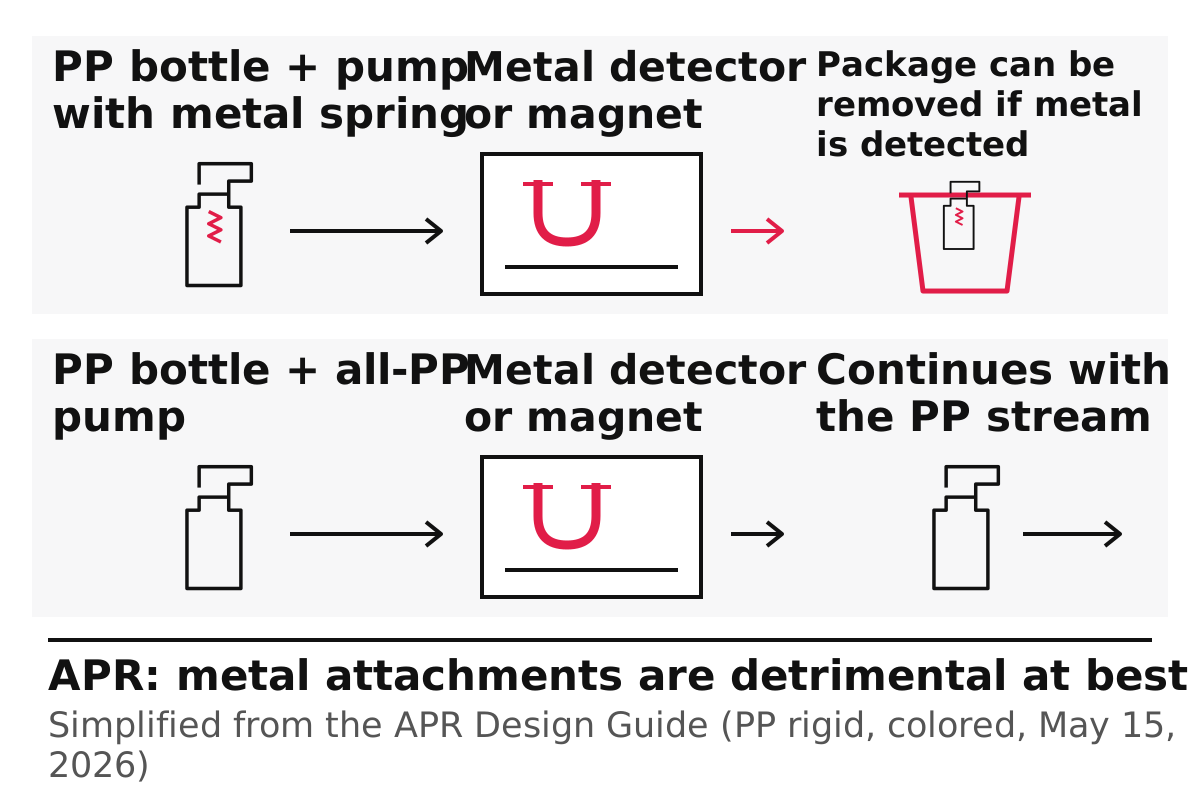
Brands score this too. Packaging World reported on September 8, 2026 that Kenvue’s internal circularity tool gave one shampoo’s packaging a “Very Poor” rating because its pump contained a metal spring, and that its Aveeno brand launched an all-plastic lotion pump in Europe, the Middle East and Africa to remove the metal that had hindered recyclability. That is one company’s tool, but it shows why pump makers are pursuing metal-free designs.
Two limits apply to ALPLA’s pump. The release does not say which bottle materials it is meant for, and APR’s guidance is about design, not about acceptance in a given town’s recycling program.
Takeaway: A PP pump helps a PP bottle get recycled on paper; certification and local acceptance are separate questions.
Who is affected, and how?
The people affected are those choosing or designing dispensers for foaming personal care products, and students who want a current DFM case to set beside our product design articles. The table sets out the likely impact by reader and the basis for it.
| Reader | Impact | Basis |
|---|---|---|
| Product design students | A current case of designing a mechanism in one plastic | ALPLA release; APR guidance |
| Packaging engineers at personal care brands | Another metal-free foamer option to evaluate | ALPLA release and product page |
| Sustainability teams | If paired with a PP package, can be assessed against APR’s compatibility rules | APR guidance; ALPLA names no bottle material or certification |
| Filling and capping line owners | Unknown; fit has not been published | Not in any source |
| Pharma packaging teams | Named as a target sector; no compliance data published | ALPLA release |
Takeaway: Design and evaluation work can start now; the sources reviewed disclose nothing on line integration or pharma compliance.
When should you act?
You can start evaluating now, but there is no date to plan production around. ALPLA has given no timetable for commercial production, US availability or sampling, so treat every date below the trade show as unknown.
| Milestone | Date | Status |
|---|---|---|
| Announcement | September 22, 2026 | Confirmed by ALPLA |
| Trade show presentation, Dubai | October 6–8, 2026 | Announced by ALPLA |
| Commercial production with anchor customers | Not announced | Needs checking with ALPLA |
| US availability, samples, pricing | Not announced | Needs checking with ALPLA |
For students the case is usable today: it fits a design portfolio as a clearly labelled analysis of public material, never as work done for or with ALPLA.
Takeaway: Plan questions now and dates later; the sources reviewed announce no production dates.
What is still unconfirmed?
The key unknowns are third-party recyclability, US availability, the pump’s interface specifications (output and neck finish) and filling-line fit; the full list, with who can confirm each item and what document would settle it, follows.
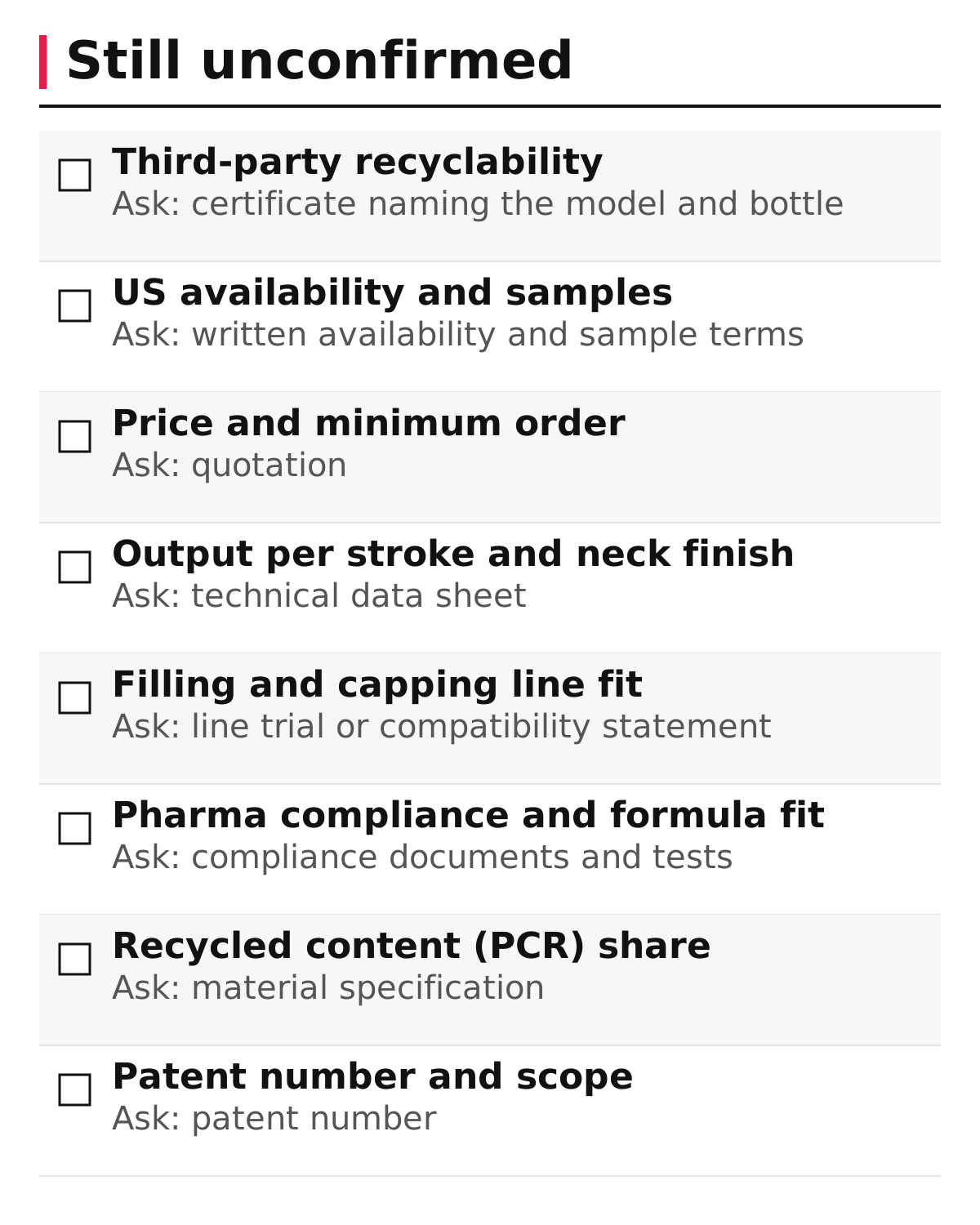
| Open item | Who can confirm | What to ask for |
|---|---|---|
| Third-party recyclability assessment (for example APR recognition or RecyClass) | ALPLA; the assessing body | Certificate or recognition letter naming the model and bottle material |
| Recycling in the US system | Local programs; APR | Program acceptance, APR test results |
| US availability, samples, timing | ALPLA | Written availability and sample terms |
| Price and minimum order quantity | ALPLA | Quotation |
| Output per stroke and neck finish of the AF-MP-150 | ALPLA | Technical data sheet |
| Fit with filling and capping lines | ALPLA; the line supplier | Line trial or compatibility statement |
| Pharma use: compliance and formula compatibility | ALPLA; the brand’s regulatory team | Compliance documents and compatibility tests |
| Share of recycled content (PCR) available | ALPLA | Material specification |
| Patent number and scope | Patent databases; ALPLA | Patent number |
| What “tomorrow’s regulatory requirements” refers to | ALPLA | The regulation named |
Takeaway: Ask for documents, not assurances; each row names the one that would answer it.
Our reading
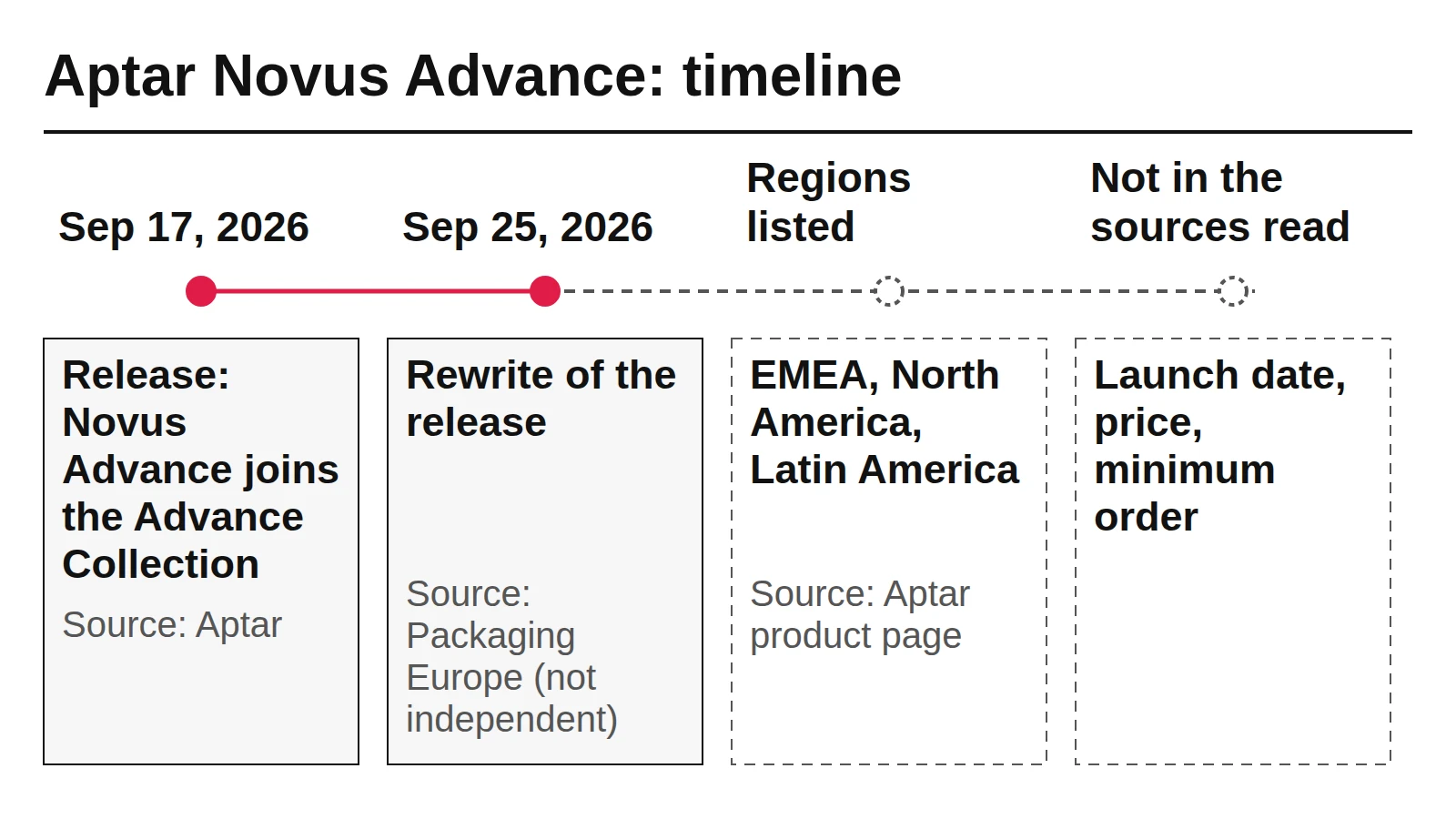
Our reading, as editors rather than testers: the announcement is a credible signal that metal-free foamers are moving from development toward production, because ALPLA ties it to an existing range of mono-material dispensers and to anchor customers. It is not yet evidence that this pump performs, recycles or fits lines as a metal-spring foamer does. Aptar’s Novus Advance pump, which Aptar describes as having a PP and PE cartridge, shows a related route, and its L’Occitane pump, which Aptar says is built on its Satine platform, shows customisation of an existing design; comparing the three is a useful exercise. More design-for-manufacturing articles are under DFM and the dispensing pumps tag.
Takeaway: Watch for a production date and a third-party recyclability assessment; until then the claims are ALPLA’s alone.
When this does not apply
This reading covers ALPLA’s public statements as of October 7, 2026. It does not cover the pump’s internal design, which is unpublished; the outcome of the Dubai trade show, which was still under way; or any market other than the general US recycling context described by APR. It is not purchasing advice, and nothing here comes from handling the product.
Takeaway: Recheck the sources when ALPLA announces production or US availability.
How this page was put together
We read ALPLA’s press release of September 22, 2026 and its pump product page, Packaging Europe’s rewrite of September 23, 2026, the APR Design Guide for colored PP rigid packaging (updated May 15, 2026) and Packaging World’s report on Kenvue of September 8, 2026, all on October 7, 2026. ALPLA’s release is the only primary source about the product; the Packaging Europe article repeats it. The design table, open-items list and reading are our analysis. We will revisit the page when ALPLA publishes a production date or a third-party assessment.
Takeaway: Re-read ALPLA’s newsroom when a production date or certification appears, and update the open items from it.
Related reading:
- Injection molding design rules — See the molding rules a single-plastic mechanism has to respect.
- Aptar Novus Advance pump reading — Compare a full-polyolefin pump announced the same month.
- Aptar L’Occitane pump reading — Compare customisation on an existing pump platform.