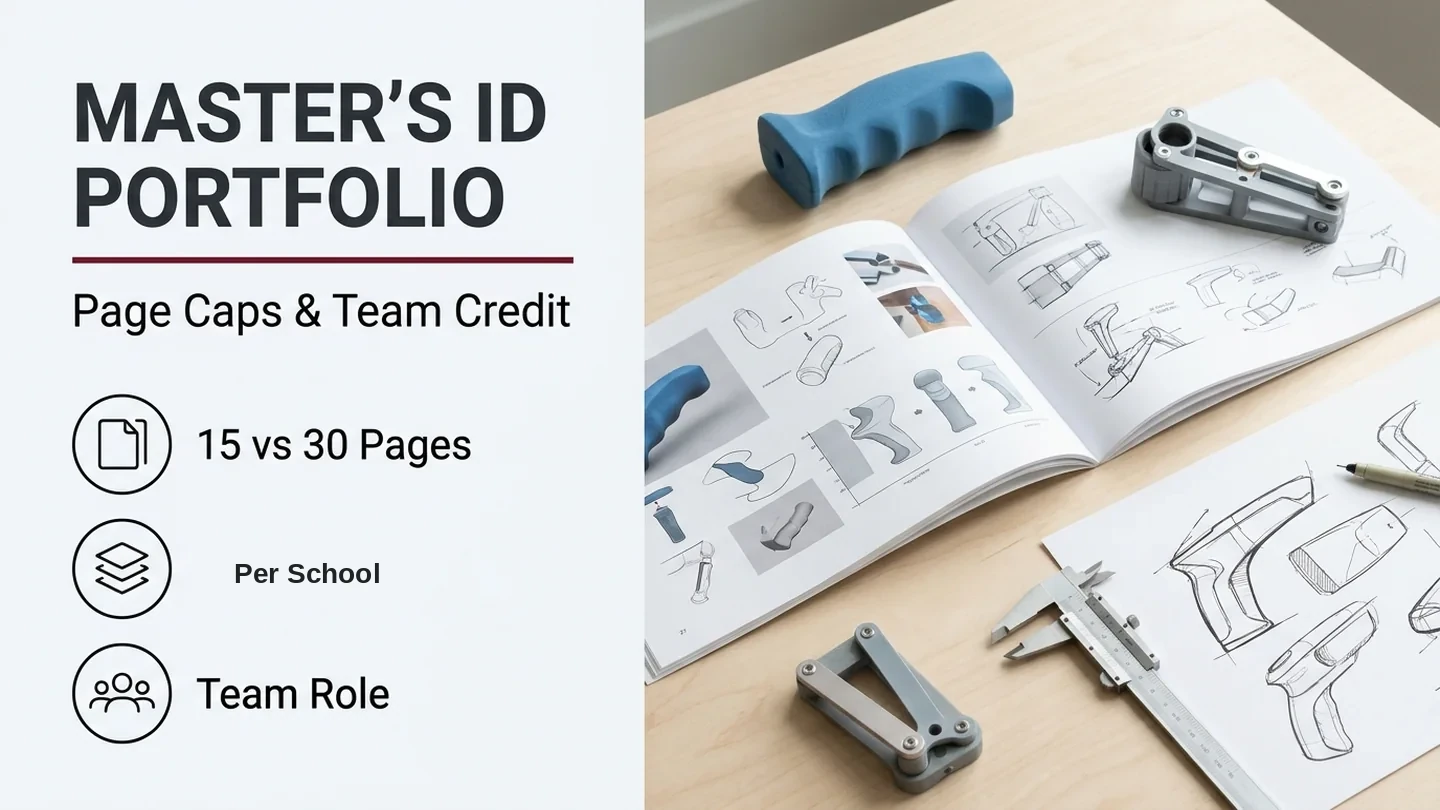
Graduate industrial design and product design programs do not share a universal project count or page budget. Georgia Tech’s Master of Industrial Design (MID) caps PDF uploads at 15 pages, the University of Washington’s Master of Design (MDes) accepts up to 20 pages of design work plus a cover page in a PDF up to 30 MB, and TU Delft’s MSc Integrated Product Design asks for 3-5 projects inside a PDF of at most 30 A4 pages and 20 MB. Other schools count pieces, examples, or media slots instead of total pages: RIT’s Industrial Design MFA describes 4-6 projects, Carnegie Mellon’s MDes requires 5-9 pieces or projects, NC State’s MID suggests 10-15 examples of work, and RISD’s MID collects 10-20 images in SlideRoom.
Exporting an uncut undergraduate studio archive into one long PDF breaks tight submission caps or per-item upload rules before faculty evaluate your work. Size each export to the target department’s unit of count, balance finished visuals with documented development iterations and abandoned paths, and state which technical parts you built on every collaborative project.
How many projects and pages do master of industrial design portfolios require?
Published master of industrial design portfolio requirements measure length in four distinct ways: total PDF pages, complete project narratives, individual example PDFs, or SlideRoom visual slots. In the National Association of Schools of Art and Design (NASAD) Handbook 2026-27, dated October 27, 2026, students admitted to graduate study in art and design demonstrate readiness through portfolio review, transcript documentation, art/design major degree completion, or other means the institution determines.
| Program & Degree | Published Project or Item Count | PDF Page & File-Size Rule | Video & Written Supplements |
|---|---|---|---|
| Georgia Tech MID | Curated project set within the page ceiling | PDF format, maximum 15 pages | Required 1-2 minute video introduction; essays; Fall 2027 deadline January 15, 2027 |
| TU Delft MSc Integrated Product Design | 3-5 projects | PDF format, maximum 30 pages, maximum 20 MB, up to A4 size, landscape preferred | Max 100-word reflection per project; max 200-word note for non-visual projects |
| University of Washington MDes | Curated design projects within the page ceiling | Up to 20 pages of design work plus cover page in a PDF up to 30 MB, or a 1-page PDF with name and website URL | Links to web, animation, or video work may sit inside the PDF |
| RIT Industrial Design MFA | 4-6 projects (5-10 pages each in general guidance) | Portal upload requires 1 PDF per example up to 20 MB; multi-view examples capped at 3 pages | Item descriptions include assignment/theme, thought process, and roles |
| NC State MID | 10-15 examples of work | Cohesive original-work compilation; GRE scores not required | Brief framing text allowed to support narrative or storyboard case studies |
| RISD MID | 10-20 image portfolio (10-20 visual work examples) | Uploaded in SlideRoom after filing the main application | 100-word writing prompt on navigating a collaborator design conflict |
| Carnegie Mellon MDes (Design for Interactions) | 5-9 pieces or projects (MA in Design: do not submit portfolio) | One PDF containing the 5-9 pieces, or one PDF with a portfolio URL and passcodes | Required 1-minute SlideRoom video (cut off at 1 minute); review AI asset relevance and quality |
| Pratt Institute MID | Curated projects with sketches, three-dimensional objects, and text | One multi-page PDF, or multiple single-page PDFs or JPG files | Statement of purpose up to 500 words; optional project video up to 2 minutes |
| Royal College of Art Design Products MA/MDes | Selected finished projects and works in progress | Programme page sets content scope rather than a fixed page count | Required video up to 2 minutes; 600-800 word research agenda in PDF format |
| Arizona State University MID | Curated collection of design works and projects | Submitted via SlideRoom alongside Graduate College application | Letter of intent, resume or CV, and professional reference contacts in SlideRoom |
Keep exact degree titles attached to each requirement when organizing your application tracker. Georgia Tech, NC State, RISD, Pratt, and Arizona State award the Master of Industrial Design (MID). RIT awards an Industrial Design MFA, Royal College of Art awards an MA or MDes in Design Products, TU Delft awards an MSc in Integrated Product Design, and both Carnegie Mellon and the University of Washington award an MDes in which industrial design is one of the eligible preparation backgrounds.
How do PDF page caps compare with SlideRoom image and per-example uploads?
Multi-page PDF portals let you pace research, sketches, models, and resolved views across sequential spreads, whereas SlideRoom galleries and single-example portals treat every uploaded file as a standalone item. A 30-page master PDF built for TU Delft’s MSc Integrated Product Design is 15 pages over Georgia Tech’s published limit of no more than 15 pages, and it cannot enter RIT’s portal as one combined document because RIT’s Industrial Design MFA submission details require one PDF per work example.
Budget your page allocation per project from each school’s published ceiling before laying out spreads:
Pages per project = floor((PDF page cap - Front & divider pages) / Project count)Applying that allocation as a worked example across three published PDF limits shows why one static export fails across schools:
- At TU Delft’s 30-page ceiling across 4 projects (inside TU Delft’s 3-5 project range) with 1 cover page and 1 contents page, floor((30 - 2) / 4) equals 7 pages per project. Each project has room for problem framing, divergent sketches, technical mechanism work, a 100-word reflection, and final visuals.
- At the University of Washington’s MDes ceiling of 20 pages of design work plus a separate cover page, those same 4 projects receive 20 / 4, or 5 pages per project, because the cover page sits outside the 20-page work allowance.
- At Georgia Tech’s 15-page ceiling (where the cover counts inside the PDF), reserving 3 front pages across 3 projects leaves (15 - 3) / 3, or 4 pages per project. Sending your 30-page TU Delft file directly to Georgia Tech overshoots the limit by 15 pages.
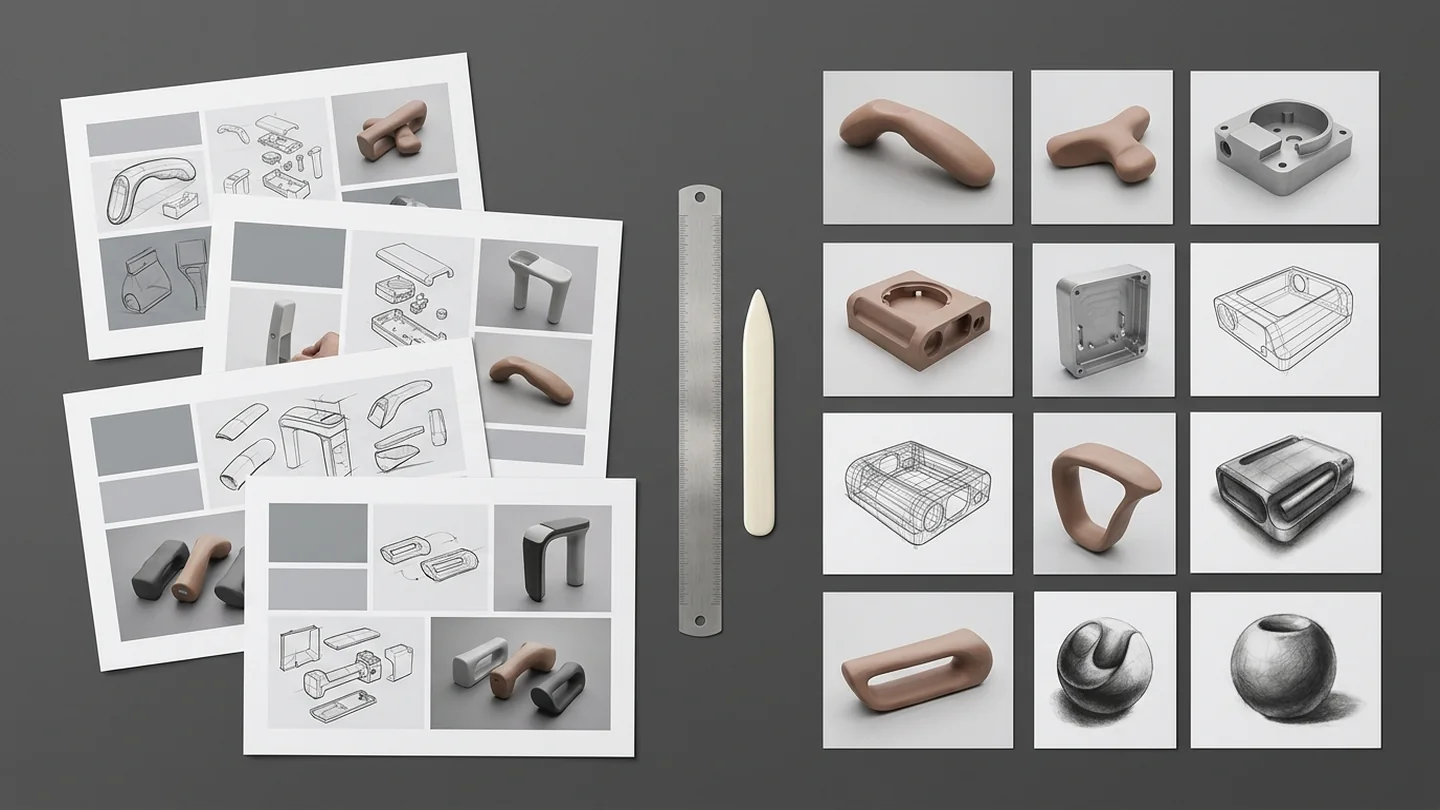
Use three threshold rules when converting your master archive across application portals:
- When applying to both 30-page and 15-page PDF programs, maintain two separate InDesign or Figma exports rather than compressing every school down to 15 pages; TU Delft asks for process depth in one project, technical depth in one project, and a 100-word reflection on every project.
- When preparing RIT’s Industrial Design MFA upload, reconcile both parts of RIT’s published instructions: program guidance describes 4-6 projects of 5-10 pages each as a cohesive body of work, while the portal upload instructions require a separate PDF (up to 20 MB) for each example of work and cap multi-view PDFs of a single example at 3 pages. Package each uploaded example inside that 3-page, 20 MB per-file ceiling.
- When substituting a portfolio website at the University of Washington MDes or Carnegie Mellon MDes, still upload the required pointer PDF: UW requires a one-page PDF carrying your full name and URL, and Carnegie Mellon requires one PDF containing your URL and any passcodes needed to view gated work.
For 12-column spread grids, cover-page typography, and composite slide conversion mechanics, use our industrial design portfolio layout and cover guide.
What process evidence should a graduate industrial design portfolio include?
Georgia Tech, NC State, and RIT ask applicants to show development work with the finished design. The department pages below name the process evidence they ask to see with the finished design.
Georgia Tech’s MID guidelines instruct applicants to show every project’s path from problem identification through research, analysis, and iterations, noting that articulating your thought process holds major value. NC State’s MID admissions page lists development sketches among core portfolio materials and advises candidates to focus on process rather than a final solution alone, with every piece representing the applicant’s original work. RIT’s Industrial Design MFA states that the development process, concept exploration, and problem-solving are as important as the final design, and asks for skills such as storytelling, model making, CAD, sketching, and visualization.
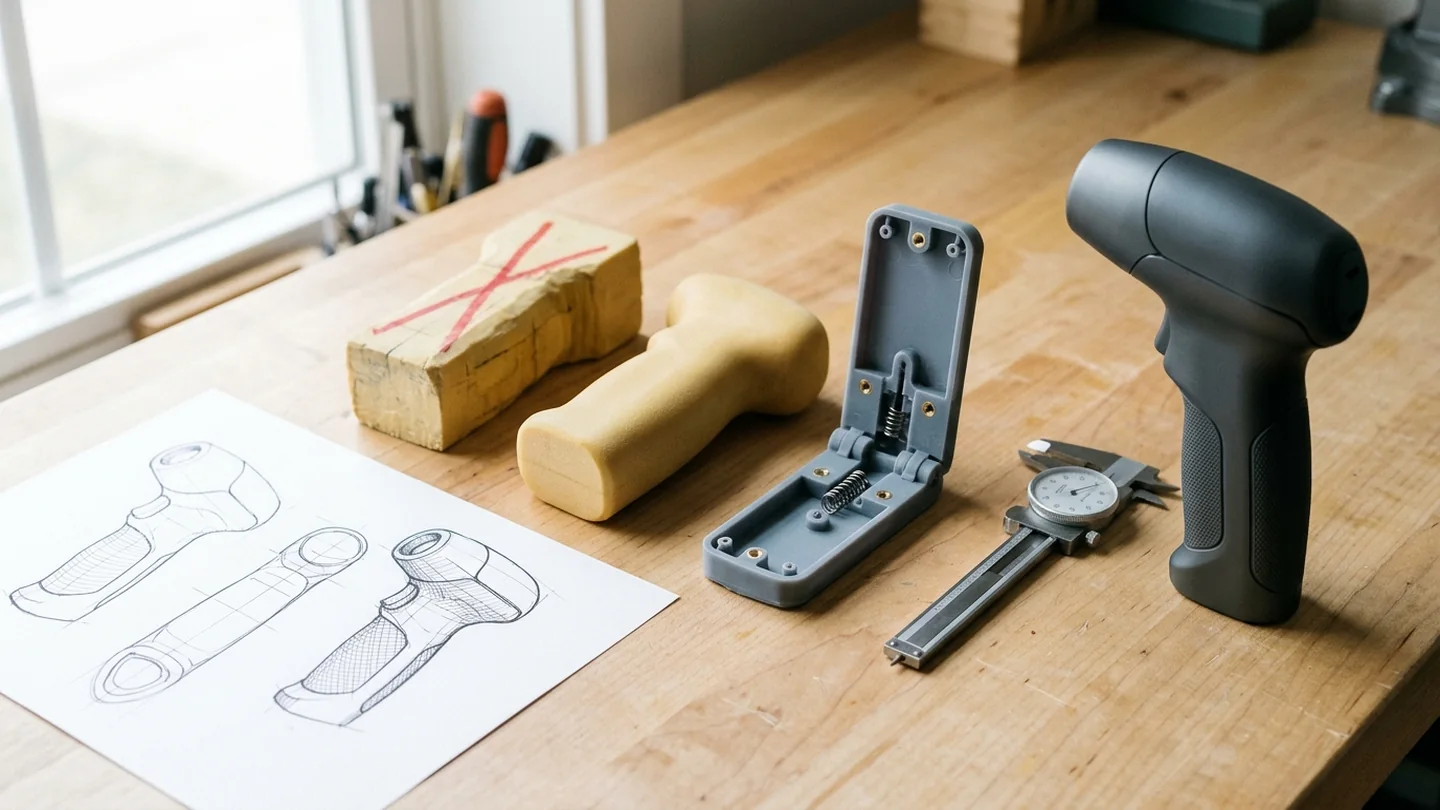
TU Delft and the Royal College of Art ask for abandoned directions and unfinished work in addition to the finished project. TU Delft’s MSc Integrated Product Design requires at least one project to document sketches, iterations, abandoned directions, and what changed your thinking, plus a reflection of at most 100 words on every project explaining what you would do differently now. If you include a non-visual investigation at TU Delft (such as software development, a scientific study, or an essay-based project), condense it into a text summary of at most 200 words. Royal College of Art’s Design Products MA/MDes welcomes works in progress alongside finished work, including sketchbooks, rough prototypes, research documents, and process books that explain what you learned through testing and iteration.
Pratt’s MID committee similarly looks for problem statements and written descriptions paired with drawings used as a communication tool, three-dimensional objects, and graphic presentation, backed by an optional video of up to 2 minutes walking through one project’s research and lessons learned. Carnegie Mellon’s MDes looks for research, iteration, critique, prototyping, and form resolution across your 5-9 pieces.
The NASAD Handbook 2026-27, dated October 27, 2026, describes industrial designers as people who create and develop concepts and specifications that optimize the function, value, and aesthetics of products, environments, systems, and services. Its industrial design essential competencies include the ability to research, define, and communicate about problems, conceptualize and evaluate alternatives, test and refine solutions, and communicate concepts from abstraction and sketches to detailed multi-dimensional representations. When selecting which sketches, foam studies, and assembly sections to keep inside a single project story, follow our industrial design portfolio case-study decision structure. To turn benchtop mockups into verifiable iteration records rather than decorative photos, log the setup, task, and observations with our physical prototype testing plan.
How do you credit your role and technical parts on team projects?
State on every project opener whether the work was individual or collaborative, name your specific role, and identify the exact physical, digital, or analytical components you executed yourself. TU Delft, Carnegie Mellon, and the Royal College of Art each ask you to name your role and the parts you completed on team work.
| Institution & Program | Published Team-Credit & Attribution Rule | Specific Evidence or Prompt to Prepare |
|---|---|---|
| TU Delft MSc Integrated Product Design | State whether each project was individual or team work; name your unique team contribution | In at least one project, demonstrate technical depth (CAD, electronics, code, materials work, or mechanism design) and specify which parts you did yourself |
| Carnegie Mellon MDes | Clearly identify your role and specific contributions on all collaborative projects | Pair role labels with process, critique, prototyping, and form-resolution artifacts across your 5-9 pieces |
| Royal College of Art Design Products MA/MDes | Clearly identify your role and specific contributions when including group or interdisciplinary projects | Connect your individual tasks to the design problem and what was learned through testing and iteration |
| Georgia Tech MID | Tailor project narratives to emphasize personal contributions, strategic insights, and successful endeavors | Condense complex information into a clear narrative, and show projects that blend a prior field with design principles |
| RIT Industrial Design MFA | Include your role or roles alongside the assignment theme and thought process in item descriptions | Portal guidelines name role examples such as director, writer, and editor alongside award or exhibition notes |
| RISD MID | Address collaboration dynamics in the supplemental graduate writing prompt | Answer the 100-word prompt describing how you navigated a conflict when a collaborator challenged your design principle or perspective |
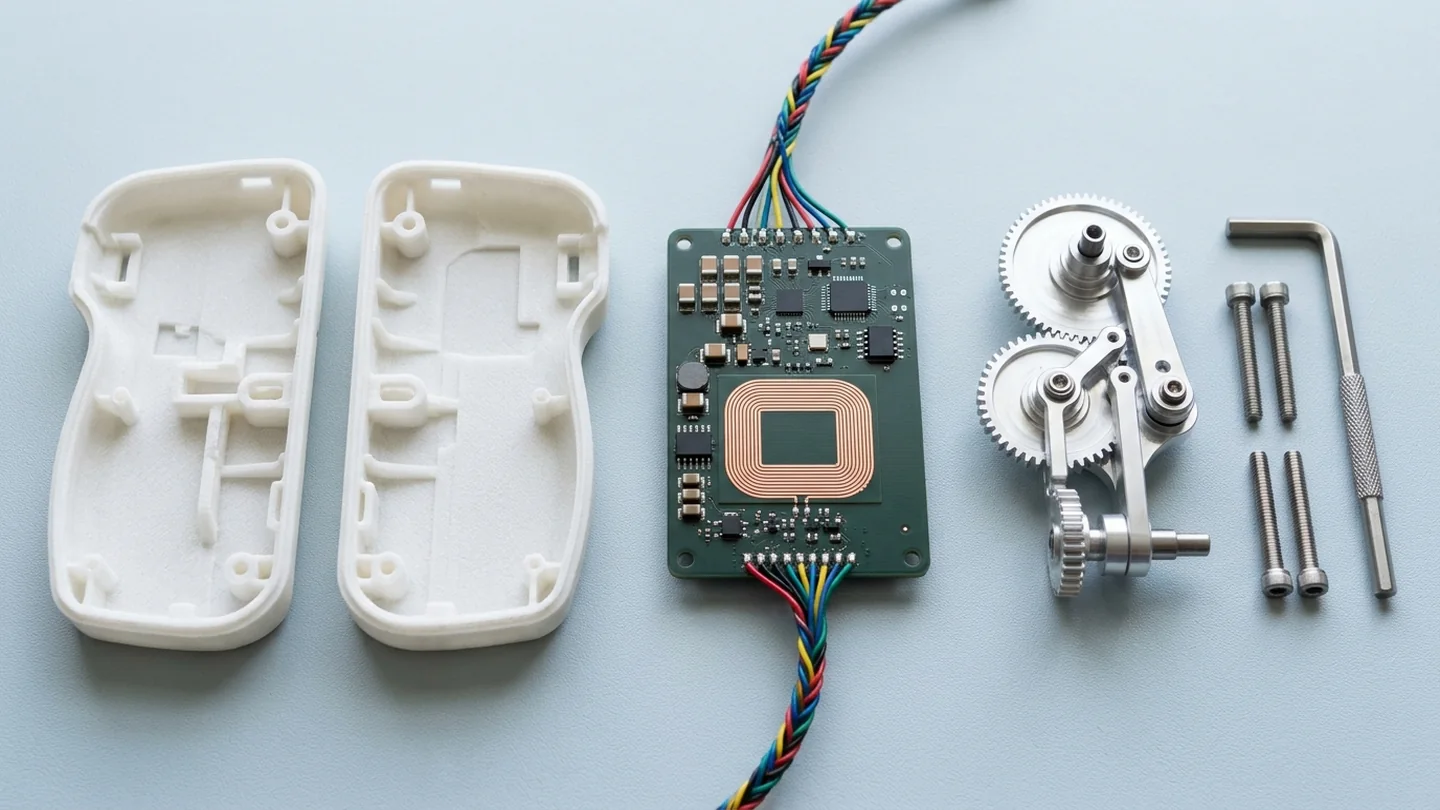
NASAD’s 2026-27 industrial design essential competencies, in the handbook dated October 27, 2026, include collaborative skills and the ability to work effectively in interdisciplinary or multidisciplinary teams. Name the role and the parts you made on every collaborative project. On an electromechanical hardware project, isolate the subassemblies you built: if you modeled the ribbed SLS enclosure in CAD and ran ergonomic grip trials while an electrical engineering teammate laid out the PCB, photograph and annotate the enclosure boss geometry and grip test setup rather than claiming the circuit board. When uploading to RIT’s portal, include the thought process, assignment theme, and role labels requested in the item description field (where RIT lists examples such as director, writer, and editor). When applying to RISD, prepare a concrete collaborator disagreement and resolution strategy for the 100-word MID writing sample in addition to curating your 10-20 SlideRoom images.
How do portfolio rules change without an industrial design degree?
Applicants holding bachelor’s degrees in engineering, architecture, computer science, fine arts, anthropology, or marketing commonly enter extended preparatory tracks and can submit original fabrication, technical problem-solving, or interdisciplinary builds rather than consumer-product styling exercises. However, you must check whether a foundational track requires a portfolio, requires post-graduate work experience, or bars portfolio uploads altogether.
| Institution | Track for Design Bachelor’s Degree | Track for Non-Industrial-Design Degree | Portfolio Adjustments for Non-Design Applicants |
|---|---|---|---|
| NC State MID | Track 2: 48 credit hours (4-year industrial design or related design degree) | Track 3: minimum 30 credit hours in year one, graduate faculty review, then minimum 48 graduate credit hours | Submit 10-15 original work examples showing how you see and tackle problems, including hobby builds, sketches, coursework, or non-physical problem solving |
| RISD MID | 2-year MID expanding individual industrial design methodologies | 2.5-year MID starting in Wintersession for students without prior design training or from another field | Submit 10-20 visual examples in SlideRoom; the program’s approximately 20 graduate students include people from architecture, engineering, fine arts, graphic design, anthropology, and marketing, along with other fields outside industrial design |
| Arizona State University MID | 2-year MID (bachelor’s or graduate degree in industrial or product design or related field) | 3+ year MID (bachelor’s degree in a field outside industrial design) | Curated SlideRoom portfolio showing creativity, conceptualization, and visual communication of ideas |
| Georgia Tech MID | Direct graduate placement determined individually during application review | Optional introductory certificate year for newcomers to build core design skills | Submit up to 15 PDF pages highlighting interdisciplinary projects that blend your prior field of study with design principles |
| RIT Industrial Design MFA | Standard MFA studio sequence | Eligible without a traditional design degree | Submit fabrication or problem-solving projects outside traditional industrial design within the 4-6 project / per-example PDF rules |
| Royal College of Art Design Products | MA/MDes Design Products | Open to applicants from fields outside design | Any project type is accepted when explained through motivations, specific problems, solutions, and testing/iteration lessons |
| University of Washington MDes | BA or BFA in industrial/product, visual communication/graphic, or interaction design | Related degree (CS, architecture, engineering, marketing/PR/communication) plus at least 1-2 years of professional design practice | Same 20-page + cover PDF (up to 30 MB) or 1-page website URL PDF demonstrating design knowledge and abilities |
| Carnegie Mellon School of Design | MDes in Design for Interactions (requires at least 1 year of full-time professional experience) | 1-year (two-semester) MA in Design for little or no prior design experience; no work experience required | MDes requires 5-9 pieces; MA in Design explicitly instructs applicants not to submit a portfolio (not considered) |
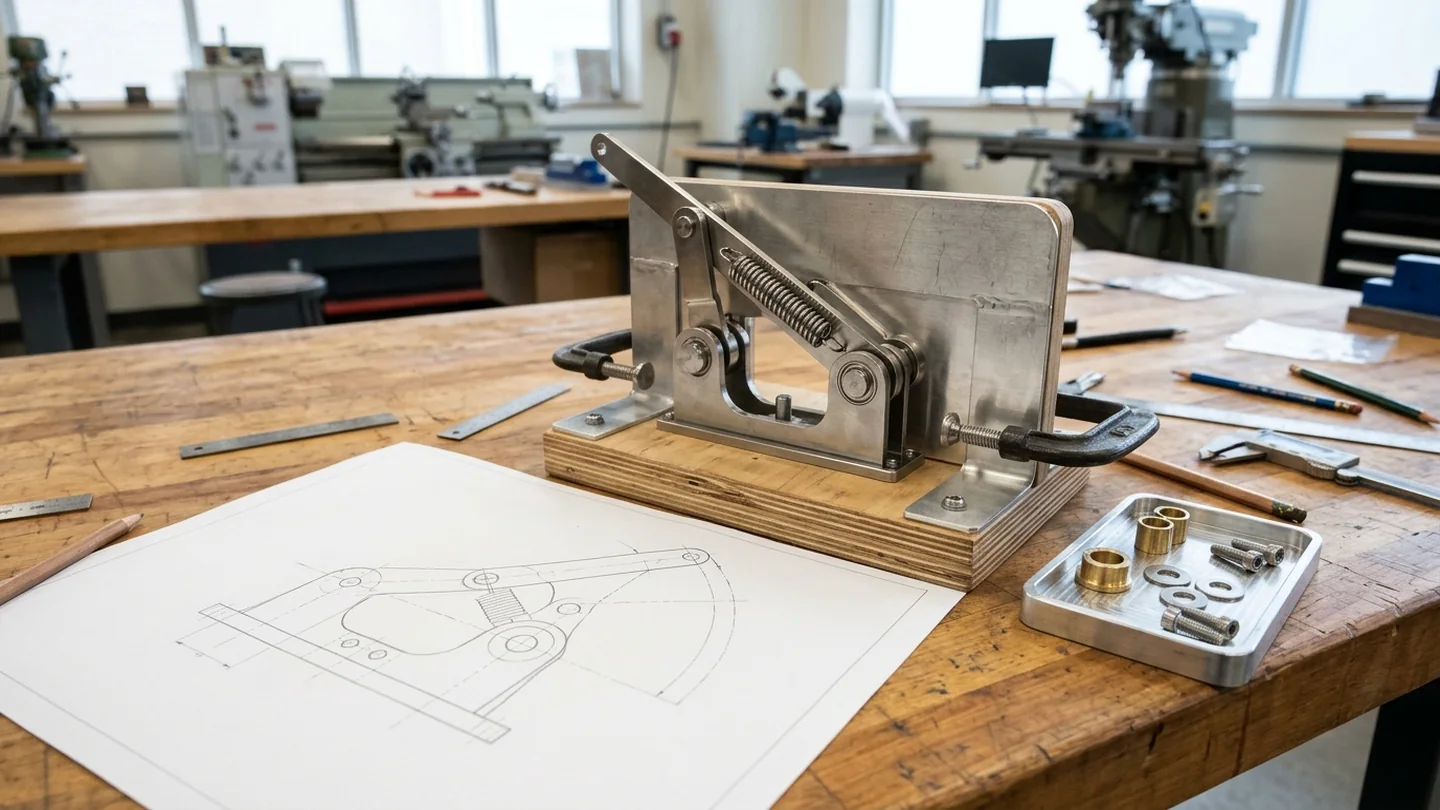
Two structural traps catch career changers who apply to multiple schools with a single checklist. First, Carnegie Mellon separates career changers and experienced practitioners at the degree level: if you apply to CMU’s foundational one-year MA in Design, do not attach a portfolio, whereas CMU’s MDes requires both 5-9 portfolio pieces and at least one year of full-time post-undergraduate professional experience. Second, the University of Washington’s MDes expects candidates coming from engineering, computer science, architecture, or marketing to pair that degree with at least 1-2 years of professional design practice, whereas NC State Track 3, RISD’s 2.5-year Wintersession MID, ASU’s 3+ year MID, and Georgia Tech’s certificate year build foundational studio training into the degree timeline itself.
Pre-submission audit: project mix, page budget, and credit checklist
Verify every file specification, supplement cap, and role statement against each target program’s live application portal before exporting your final files. Copy the checklist below into your application folder and complete one block per school so no uncut PDF or uncredited group project slips into an upload slot.
PROGRAM TARGET: [University + Exact Degree Title + Track (e.g., 2-yr vs 2.5-yr / Track 2 vs Track 3)]
PORTFOLIO REQUIRED?: [Yes / No — e.g., CMU MA in Design = Do NOT submit]

1. UNIT & COUNT CHECK
   - Published unit: [Total PDF pages / Projects / Examples / SlideRoom images]
   - Target count verified: [e.g., 3-5 projects | 4-6 projects | 5-9 pieces | 10-15 examples | 10-20 images]

2. FILE & PAGE BUDGET CHECK
   - Upload format: [Single multi-page PDF / Per-example PDFs / Single-page PDFs or JPGs / SlideRoom media / 1-page URL PDF]
   - Page cap met: [e.g., <= 15 pages Georgia Tech | <= 20 work pages + cover UW | <= 30 A4 landscape pages TU Delft | <= 3 pages per multi-view example RIT]
   - File size met: [e.g., <= 20 MB TU Delft & RIT per PDF | <= 30 MB UW]
   - Website passcodes included on 1-page URL PDF (if applicable): [Checked / N/A]

3. PROCESS & TECHNICAL DEPTH CHECK
   - Problem -> research -> analysis -> iteration path shown in each project: [Checked]
   - Sketches, rough models, or works in progress included where permitted: [Checked]
   - Abandoned directions + what changed your thinking documented (required for >= 1 TU Delft project): [Checked]
   - Per-project reflection (<= 100 words for TU Delft) & non-visual summary (<= 200 words for TU Delft): [Checked / N/A]

4. TEAM CREDIT & SUBSYSTEM OWNERSHIP CHECK
   - Individual vs. team status marked on every project: [Checked]
   - Exact personal role named (including RIT item description roles): [Checked]
   - Personal technical parts isolated (CAD, electronics, code, materials, mechanism design): [Checked]

5. SUPPLEMENTAL VIDEO & WRITING CAPS
   - Video length verified: [<= 1 min cut-off CMU | 1-2 min Georgia Tech | <= 2 min RCA required / Pratt optional]
   - AI-generated video assets reviewed for relevance & quality (CMU): [Checked / N/A]
   - Written prompts inside word limits: [<= 100w RISD collaborator conflict | <= 500w Pratt SOP | 600-800w PDF RCA research agenda]
Browse our product design, prototyping, and DFM articles to strengthen the physical modeling, testing, and manufacturing sections inside your selected portfolio projects.
Sources
- Georgia Tech School of Industrial Design: MID Portfolio Guidelines
- Georgia Tech School of Industrial Design: Graduate Admissions
- NC State College of Design: Master of Industrial Design Admissions
- NC State College of Design: Master of Industrial Design Tracks
- Rhode Island School of Design (RISD): Industrial Design Master’s Programs
- Rhode Island School of Design (RISD): Graduate Application and Portfolio Instructions
- Pratt Institute: Graduate Departmental Requirements (Master of Industrial Design)
- Rochester Institute of Technology (RIT): Portfolio Requirements for Graduate Programs
- University of Washington School of Art + Art History + Design: MDes Graduate Admissions
- Carnegie Mellon University School of Design: Master’s Program Admissions
- Royal College of Art (RCA): Design Products MA/MDes
- Royal College of Art (RCA): Portfolio Advice
- Arizona State University (ASU): Industrial Design MID Degree Requirements
- Delft University of Technology (TU Delft): MSc Integrated Product Design Portfolio Requirements
- National Association of Schools of Art and Design (NASAD): Handbook 2026-27, dated October 27, 2026, Industrial Design Standards and Graduate Admission Requirements