A brief that treats a guess as a user need fails the first critique, and the room argues the wrong problem. You can write the one-page bound now, with each sentence tagged as observed, sourced, assumption or unknown.
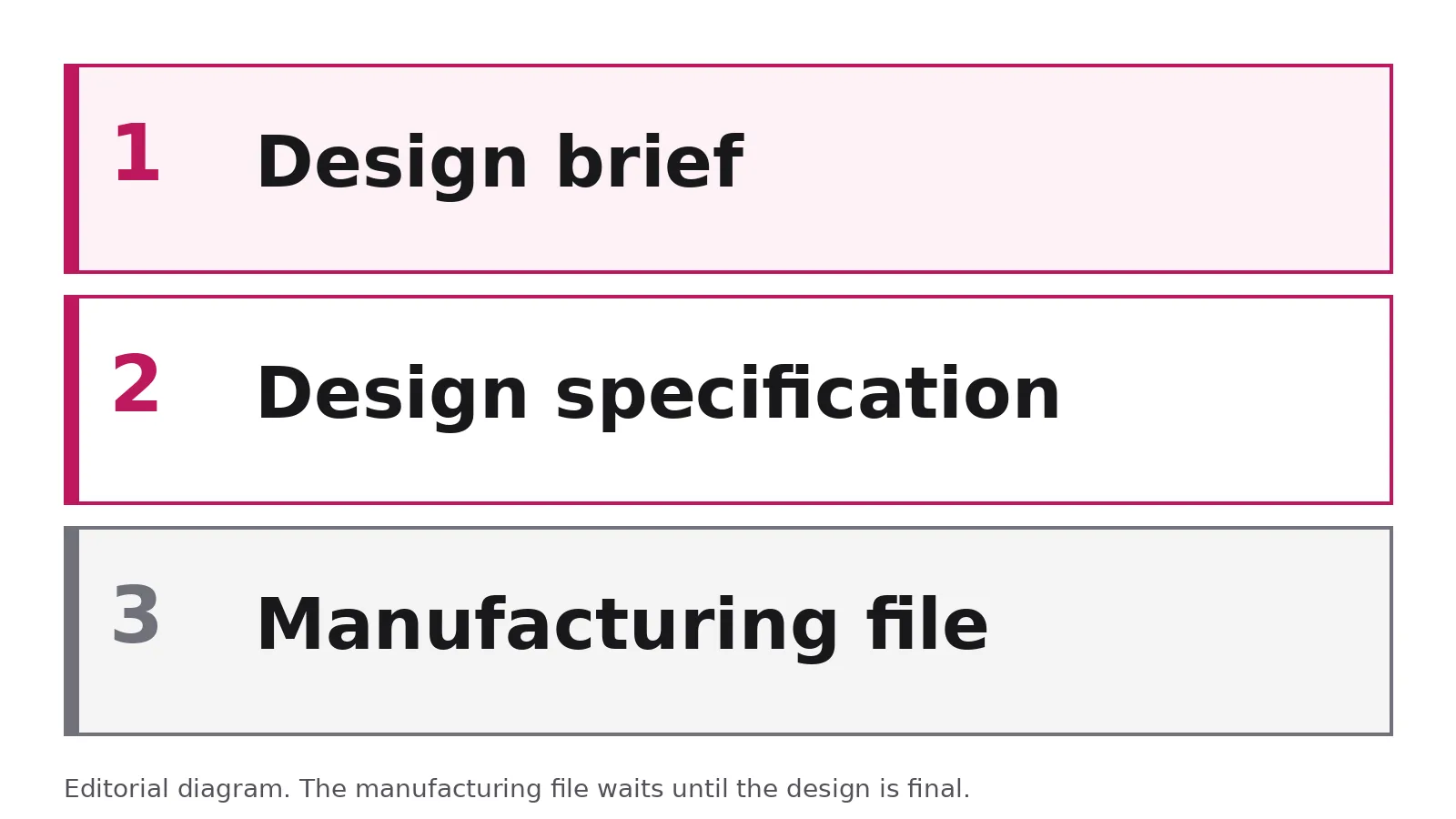
A product design brief for students is one page you write before any interviews. It names the person, the situation, the conditions you will keep, and the products you will not design. It leaves the object’s shape unnamed. A public slide from MIT OpenCourseWare 15.783J / 2.739J, Product Design and Development (Spring 2006, PDF page 3, read 12 October 2026), places Mission Statement before Identify Customer Needs and before Establish Target Specifications. Design Council’s Double Diamond page, read the same day, describes the first diamond as the work of understanding the problem rather than assuming it. This sheet is that opening bound. Testable specifications come later, on another page.
You will leave with a filled one-page starter and a second table that tags each line. The desk accessory is a hypothetical example. This site did not watch a desk or measure a pencil. No school assigned the project.
What goes on a product design brief for students?
Six fields fit on one page. Leave a field blank when filling it would take a measurement you do not have, or a shape you already prefer.
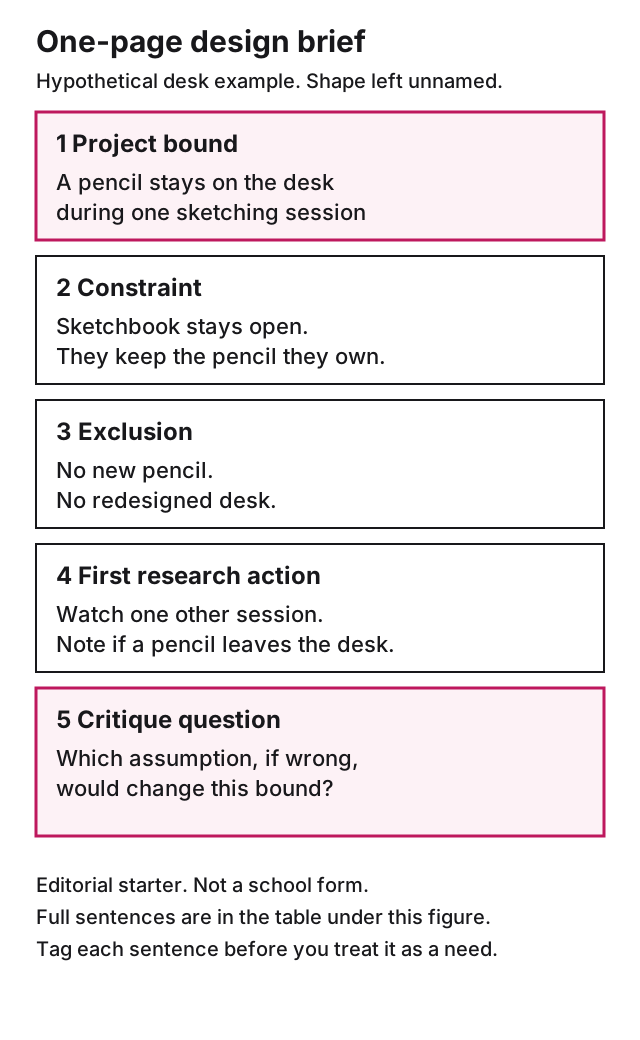
Copy the field names. Replace the hypothetical column with your own desk, and use an event only if you saw it.
| Field | What to write | Hypothetical desk example |
|---|---|---|
| Project bound | The person, the situation, and the outcome you care about. Leave the object unnamed. | Design a small accessory for one study desk so a pencil stays on the desk during a seated sketching session. The person already owns the pencil and the sketchbook. |
| People and situation | Who is in the room, and what they are doing. | One person, sketching, at their own desk. No client has asked for this. |
| Constraint | A condition the project has to live inside. | The sketchbook stays open on the same desk. The person keeps the pencil they already own. |
| Exclusion | A neighboring product this project will not become. | A new pencil and a redesigned desk are outside this project. |
| First research action | One observation you will do next, and the note you will write. | Sit through one other person’s sketching session. Write down whether a pencil leaves the desk surface. |
| Critique question | The question you want the first review to answer. | Which assumption, if it is wrong, would change this bound? |

When you start your own sheet, copy these prompts and replace them. Leave a cell empty when you have nothing honest to put there.
| Field | Your line |
|---|---|
| Project bound | Person, situation, and outcome. No product shape. |
| People and situation | Who is there, and what they are doing. |
| Constraint | A condition you are choosing to keep. |
| Exclusion | What this project will not become. |
| First research action | The one session you will watch, and what you will write down. |
| Critique question | The question you will ask the room. |
Takeaway: The one-page brief bounds the project. A preferred shape waits on a concept list until the bound exists.
How do you tag what you know and what you are guessing?
Give every sentence one tag: observed, sourced, assumption, or unknown. You can finish the page while most lines are still assumptions or unknowns. Writing the brief before research is what makes those tags necessary.
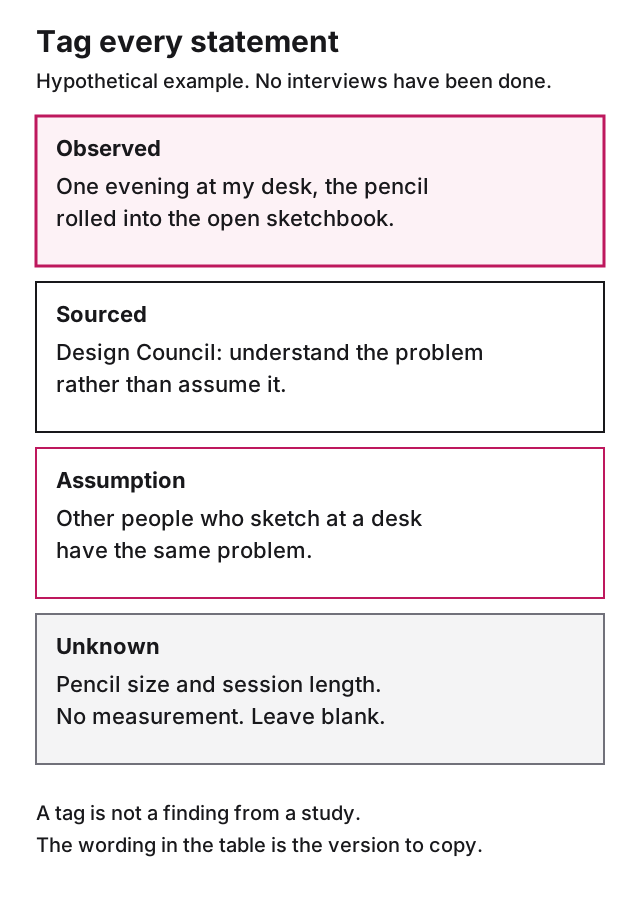
Observed means you can point to a single event. In the table, that event is invented so the tag has a sentence to sit on. On your sheet, use Observed only for something you saw. Sourced means a document you can name. A method quote is not evidence that other students share the pencil problem. Assumption means you are extending one notice to other people, or choosing a limit you have not checked. Unknown means you have no event and no document. Leave that cell without a number.
| Statement | Tag | Why that tag |
|---|---|---|
| During one evening at my own desk, a pencil rolled into an open sketchbook when I reached for a ruler. | Observed | Hypothetical single event, so the tag is visible. This site did not see it. On your sheet, this tag needs your own notice. |
| Design Council’s first diamond is for understanding the problem rather than assuming it, including time with people who are affected. | Sourced | Design Council, The Double Diamond, read 12 October 2026. This is a method. It does not show that the pencil problem is common. |
| The public slide order places a mission statement before customer needs and before target specifications. | Sourced | MIT OpenCourseWare 15.783J, Spring 2006, PDF page 3. This site is not part of that course. |
| Other people who sketch at a desk have the same pencil problem. | Assumption | Nobody else has been watched. |
| The sketchbook must stay open on the same desk. | Assumption | A project limit. It has not been checked with anyone else. |
| Pencil diameter, desk-edge shape, and how long a sketching session lasts. | Unknown | No measurement. Leave these blank. |
| Make a small block that stops the pencil. | Assumption | It names a shape. Keep it off the bound. The example leaves the shape unnamed. |
Takeaway: Tag the line before you defend it. An unknown stays blank. An assumption can stay on the page when the tag is visible.
What constraints and exclusions belong on the brief?
A constraint is a condition you accept for this project. An exclusion is a product you refuse to design. Both can be assumptions. Write them with the tag, so critique can move the fence instead of discovering it halfway through the review.
| Kind | Hypothetical line | What the review can ask |
|---|---|---|
| Constraint | The sketchbook stays open on the same desk. | Does the project still matter if the sketchbook can move? |
| Exclusion | A new pencil, and a redesigned desk, are out. | Is the interesting problem the pencil, or the desk? |
Design Council’s history of the Double Diamond, read 12 October 2026, describes Discover as questioning the challenge and then researching user needs. Define comes after that work. The team makes sense of the findings and writes a brief from those insights. The constraints on this starter are the fence for the first research action. They are not that later brief.
Takeaway: Write the fence and tag it. The review should be able to move a constraint without starting a different project in the room.
What is the first research action, and what do you ask in critique?
Choose one action that can change the bound, and one question for the review. Do the action after the sheet exists. Describe it as the next step, not as research you have finished.
For the hypothetical desk, the action is one other person’s sketching session. You write whether a pencil leaves the desk surface. One session is a note. It is not a claim about students in general. Design Council’s Double Diamond page says teams often learn more about the underlying problem and return to the start of the diamond. If that session shows the pencil stays put, the bound changes. If the sketchbook is what moves, the constraint changes. You still will not have a diameter, a session length, or a test result.
Ask this in the first critique: which assumption, if it is wrong, would change the bound? A review that only discusses the wooden block has skipped the sheet. The block in the illustration is a prop.
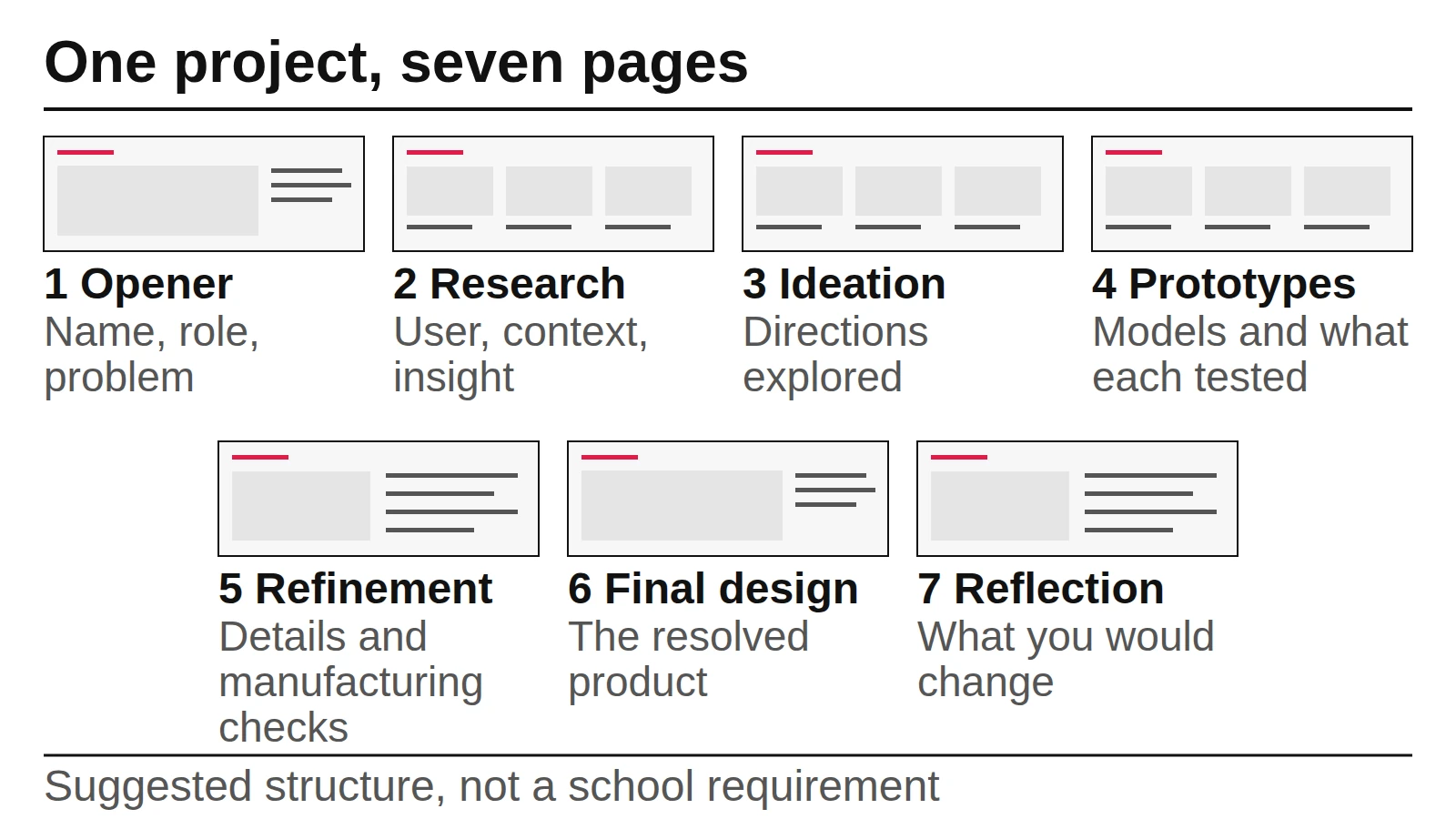
When a tagged line is specific enough to check, use the design brief and specification worksheet. That page turns one need into an observable outcome and a check. It starts from a brief you already have, and it leaves unmeasured limits open. After the project is far enough along to present, the industrial design portfolio guide covers how those pages are laid out. Keep this sheet as the record of what you knew at the start. Other product-design notes are on the blog.
Takeaway: One watched session and one review question are enough for that first critique. Specifications and portfolio layout wait until that session exists.
How this page was put together
Compiled on 12 October 2026 from three public documents: Design Council’s Double Diamond page, Design Council’s history of the Double Diamond, and the concept-development slide marked page 3 in the MIT OpenCourseWare PDF for 15.783J / 2.739J (Spring 2006). The six-field sheet and the four tags are an editorial exercise. The pencil-and-sketchbook story is hypothetical. Later slides in that MIT deck run a mechanical-pencil concept exercise and list prices. This page does not use those slides or those prices. No diameter and no test result on this page come from a measurement.
Takeaway: Use the tags on your own notes. When a document states a limit, cite that document rather than this example.